

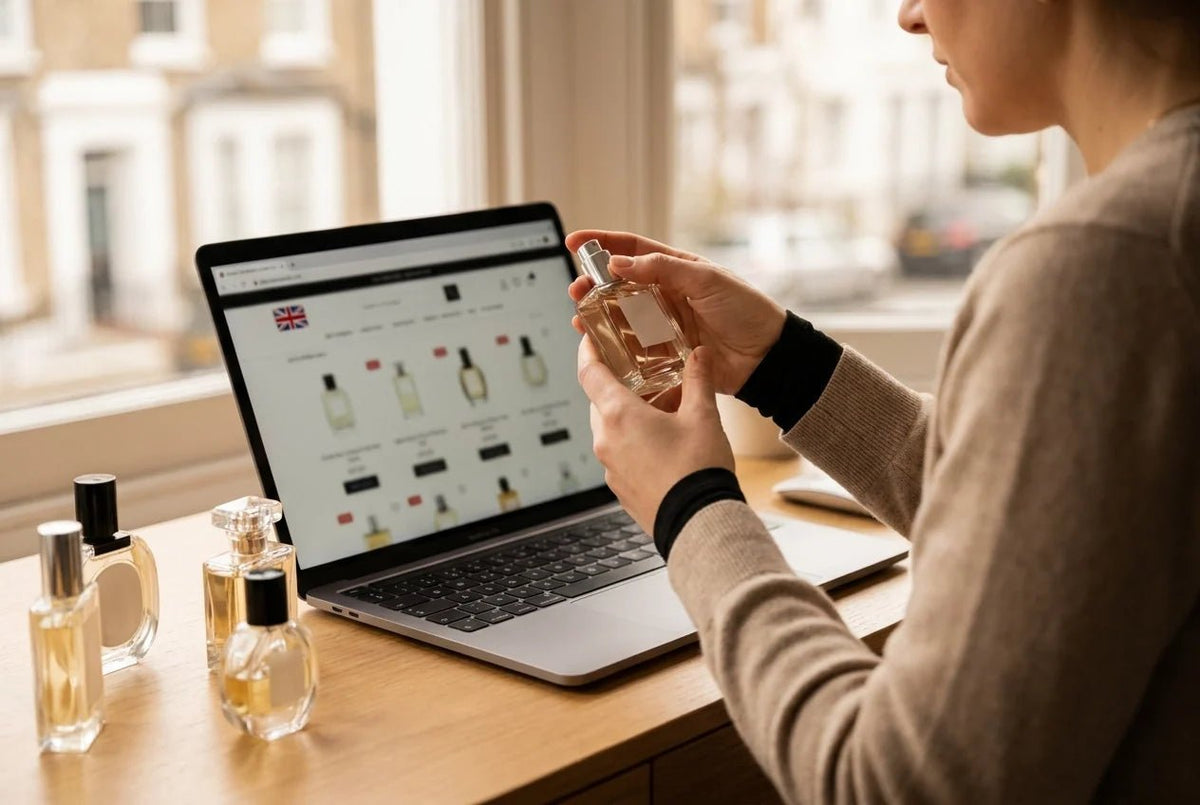
You have finally found what looks like the perfect scent. The listing promises it smells just like a high-end designer favourite, the price feels almost too good to be true, and you are one click away from adding it to your basket. Sound familiar?
Here is the uncomfortable truth: you might receive something that fades within an hour, smells nothing like the description, or arrives from a seller you cannot trace if something goes wrong. Finding a genuinely great best perfume dupe is absolutely possible, but only if you know what to look for before you buy.
This guide is built specifically for UK shoppers who are new to the world of affordable fragrances. We will walk you through seven straightforward questions to ask before placing any order online. From understanding concentration levels to spotting a trustworthy seller, checking return policies, and matching scent families to your taste, each question gives you a simple filter to use every single time. By the end, you will have a repeatable framework that takes the guesswork out of budget fragrance shopping for good.
Why Budget Perfume Buying Goes Wrong So Often
The global fragrance industry is worth tens of billions and growing fast. That growth has brought thousands of new online sellers into the market, and telling a legitimate retailer from a risky one has become genuinely difficult.
Most budget fragrance disappointments trace back to one of three problems. First, the product is counterfeit or nearly odourless. Second, the formula is low concentration and fades within an hour. Third, the scent bears no resemblance to what the listing described. These are not rare complaints. Trading Standards bodies across the UK regularly seize counterfeit fragrances, listing perfume explicitly alongside other frequently faked beauty goods.
The problem is not that buyers are careless. It is that vague anxiety about online shopping does not translate into specific, useful action before purchase.
A checklist fixes that. Five minutes of structured evaluation before you buy converts "something feels off about this listing" into a concrete pass or fail. This guide gives you seven specific questions to ask any seller. A legitimate retailer with a genuine product should answer all seven without hesitation.
For more buying guidance, the Aroma Avenue fragrance blog covers scent selection, concentration explained plainly, and how to get the most from designer-inspired fragrances.
Question 1: What Concentration Is It?
Of all the variables that determine whether a budget fragrance disappoints you, concentration is the one that matters most and appears on listings least.
Here is what the tiers mean in practice, based on widely used industry conventions:
Parfum (typically 20–40% fragrance oil): generally lasts 8 or more hours, the richest and most expensive option
Eau de Parfum (EDP) (typically 15–20%): generally lasts around 4–8 hours, strong enough for a full day's wear
Eau de Toilette (EDT) (typically 5–15%): generally lasts around 2–4 hours, lighter and often cheaper to produce
Body mist or splash (typically 1–3%): tends to fade within an hour, regardless of how appealing the bottle looks
These ranges reflect common industry usage rather than regulated definitions, and real-world longevity will vary by skin type, climate, and formula. What matters is that sellers who know what they are offering will state the tier plainly. Those who don't name the concentration are often selling EDT or body-mist strength at EDP-implied prices.
When a listing says only "perfume" or "fragrance spray" without specifying one of these tiers, treat it as a red flag.
For budget buyers, EDP is the practical sweet spot. It delivers all-day longevity without the premium price tag of a pure parfum.
Aroma Avenue labels every product with its concentration tier and offers EDP-strength designer-inspired fragrances from £24.95 for 50ml, with delivery timeframes clearly stated alongside. That level of transparency should be standard across the industry. The fact that it isn't is precisely why this is question one.
Question 2: Is This a Registered UK Business?
Once you know what concentration you are buying, the next question is just as important: who exactly are you buying it from?
Seller legitimacy is the single biggest trust signal in online fragrance shopping. If something goes wrong, an unregistered seller leaves you with no accountability and no recourse.
Here is what to check in under two minutes:
A Companies House registration number or verifiable VAT number displayed on the website
A physical UK business address, not just a PO box
A customer service contact that actually responds before you buy
Third-party listings on platforms like eBay or Amazon carry higher risk than purchasing directly from a retailer's own domain. When you search for a perfume dupe website, the results will include dozens of options. The ones worth your money have a dedicated storefront, not just a marketplace profile.
Check the domain itself too. A secure HTTPS connection, a populated About page with real business history, and an active social media presence with genuine engagement all signal that a real company is trading behind the site.
The legal stakes matter here. Under the UK Consumer Rights Act 2015, you have statutory rights to reject goods, request replacements, or claim refunds when buying from a registered trader. Those protections simply do not apply in the same way when purchasing from unverified overseas sellers.
If you want to browse women's designer-inspired fragrances from a verified UK retailer, Aroma Avenue's women's collection is a good place to see what transparent trading looks like in practice.
Question 3: Does the Listing Actually Name the Scent Notes?
Once you have verified the seller, the next question is about the product itself.
A fragrance listing without named scent notes is not a listing; it is a guess. Legitimate retailers break down the three layers that define a fragrance's character:
Top notes: what you smell in the first few minutes, typically citrus, light florals, or fresh greens
Heart notes: the core of the scent, emerging after around 15 to 30 minutes
Base notes: the long-lasting dry-down that stays on your skin for hours
These three layers work together. Remove them from the description and you have almost no useful information about what you are actually buying.
This matters most when you are evaluating the best perfume dupes. An inspired-by fragrance only makes sense as a purchase if you can verify it replicates the profile of the original. Vague phrases like "fresh and floral" or "warm and sensual" tell you nothing concrete. They could describe dozens of completely different scents.
If a retailer cannot describe their product's notes clearly, treat it as a signal. Either the formula is not well-developed, or the seller does not understand what they are selling well enough to stand behind it.
Question 4: Does the Scent Family Actually Match What You Want?
Knowing the scent notes is only half the job. The other half is knowing whether that scent family is actually your kind of fragrance before you click buy.
Most shoppers skip this step entirely, which is exactly why so many budget purchases end up unused at the back of a drawer.
The six main families, in plain terms:
Floral – romantic, classic, universally appealing; the most popular category globally
Fresh or aquatic – clean, light, easy to wear in an office or during the day
Woody or earthy – warm, grounding, works well across genders
Oriental or amber – rich, spicy, built for evenings
Gourmand – sweet, food-inspired, particularly popular with younger buyers
Chypre – mossy, layered, and more sophisticated in character
When you are looking at the best dupe perfumes, always identify the original designer fragrance's family first. If you loved a particular scent, you loved its family. Search for inspired-by options within that same category rather than browsing blind.
A quick self-test: think of three fragrances you have genuinely enjoyed wearing and look up their scent families. If they cluster together, you have found your preference profile.
This also tells you something useful about retailers. A site that organises products by scent family, or offers filter tools to narrow by category, understands its customers. You will find that kind of thoughtful structure in collections like unisex designer-inspired fragrances, where browsing by preference is built into the experience.
Question 5: What Is the Return Policy, and Can You Actually Use It?
Once you have matched your scent family, the next thing to check is what happens if the fragrance still does not work for you when it arrives.
Under the Consumer Contracts Regulations 2013, you have a statutory right to cancel most online purchases within 14 days of receiving them. However, fragrance retailers can legally restrict this for opened products, citing hygiene reasons. That exemption is legitimate, but it does not mean anything goes.
The return policy is actually a confidence signal. A retailer who believes in their product will still make the process straightforward, even where refunds on opened bottles are limited. They will not hide behind the hygiene exemption as a blanket excuse to avoid all accountability.
Red flags to watch for
"No returns on fragrances under any circumstances" with no further explanation
Policy terms buried in small-print FAQs rather than clearly linked at checkout
No email confirmation offered when you submit a return request
A returns address that resolves to an overseas location with no UK contact point
What good looks like
A fair policy states the window clearly, in plain English. It provides a simple email or contact form to initiate the process, and real customer reviews mention returns being handled without drama.
You can review Aroma Avenue's return eligibility before you buy, which is exactly the kind of pre-purchase transparency that matters.
For best dupe perfume UK shoppers especially, you cannot smell before buying. A retailer who acknowledges that and structures their policy accordingly is showing genuine confidence in what they sell.
Question 6: Are There Verified Reviews From Real Buyers?
Reviews are the closest thing to a smell test available before buying a fragrance online. The catch is that only genuine, detailed reviews actually tell you anything useful. A wall of vague five-star ratings saying "love it!" is decoration, not evidence.
What a credible fragrance review looks like:
It names the specific product, not just the retailer
It describes the scent concretely: top notes, dry-down, character
It mentions how long the fragrance lasted on skin, or how far it projected
For a dupe, it ideally compares the scent directly to the designer original it was inspired by
That last point matters most when you are evaluating a best perfume dupes company. Comparative feedback ("this smells almost identical to the original in the first two hours") tells you far more than any marketing claim on the product page.
Where to look: Third-party platforms such as Trustpilot and Google Reviews carry significantly more credibility than testimonials hosted exclusively on a retailer's own site. You can see verified buyer reviews for Aroma Avenue's fragrances as an example of the kind of transparent, platform-independent feedback worth trusting.
Red flags to watch for: A review profile that skews overwhelmingly positive with no critical feedback, or shows dozens of reviews posted within the same narrow window, is worth treating with caution. Since April 2025, UK consumer protection law formally prohibits fake review practices, so legitimate retailers have every reason to maintain authentic profiles.
Question 7: Does the Price Reflect What You Are Actually Getting?
Price is the final check, and it is one of the most telling signals in the budget fragrance market.
At the low end, suspiciously cheap products, think sub-£10 for a 100ml bottle, are almost always a warning sign. While price will vary by retailer, a bottle priced so low it seems impossible should prompt caution, it usually signals low concentration, synthetic filler, or a formula that does not match what it claims to replicate. At the other end, some sellers slap inflated prices on "dupe" products that undermine the whole point of buying an alternative in the first place.
You can read more about what fair value looks like in practice on our mission page.
Aroma Avenue's pricing sits at 50ml from £24.95 and 100ml from £29.95. That covers EDP concentration, a named scent profile, and a UK-registered business behind every order.
One practical tip: think about cost per hour of wear, not cost per bottle. A cheap 100ml EDT that fades in two hours will cost you more in the long run than a £29.95 EDP that lasts all day.
The best dupe perfume UK buyers find is never simply the cheapest available. It is the one where price, concentration, legitimacy, scent accuracy, and returns policy all align together.
Your Repeatable Buying Framework: What to Do Next
With price ticked off, you now have everything you need. Here is the full checklist in one place:
Concentration tier confirmed (EDP or clearly labelled)
Seller verified as a registered UK business
Scent notes named in full, including top, heart, and base
Scent family matched to your personal preference
Return policy clear and genuinely accessible
Reviews verified on third-party platforms
Price proportionate to concentration and quality
Run through those seven points before you buy anything. It takes under five minutes and rules out the most common mistakes before a penny is spent.
If you want to apply the checklist immediately, Aroma Avenue's collection is a straightforward place to start. Every fragrance is EDP-strength, every listing names the full scent profile, pricing starts at £24.95 for 50ml, and the business is UK-registered. All seven boxes, ticked by design.
The global fragrance market is valued at over USD 62 billion in 2025 and growing. Shoppers who use a repeatable framework like this will consistently get better value than those who browse on impulse.
Conclusion
Buying budget perfume online does not have to be a gamble. Run through all seven questions before placing any order, and only proceed when every box is ticked. Better value, fewer regrets, and a collection you actually enjoy wearing. That outcome is entirely within reach, and now you have exactly what you need to achieve it.




Leave a comment
This site is protected by hCaptcha and the hCaptcha Privacy Policy and Terms of Service apply.