

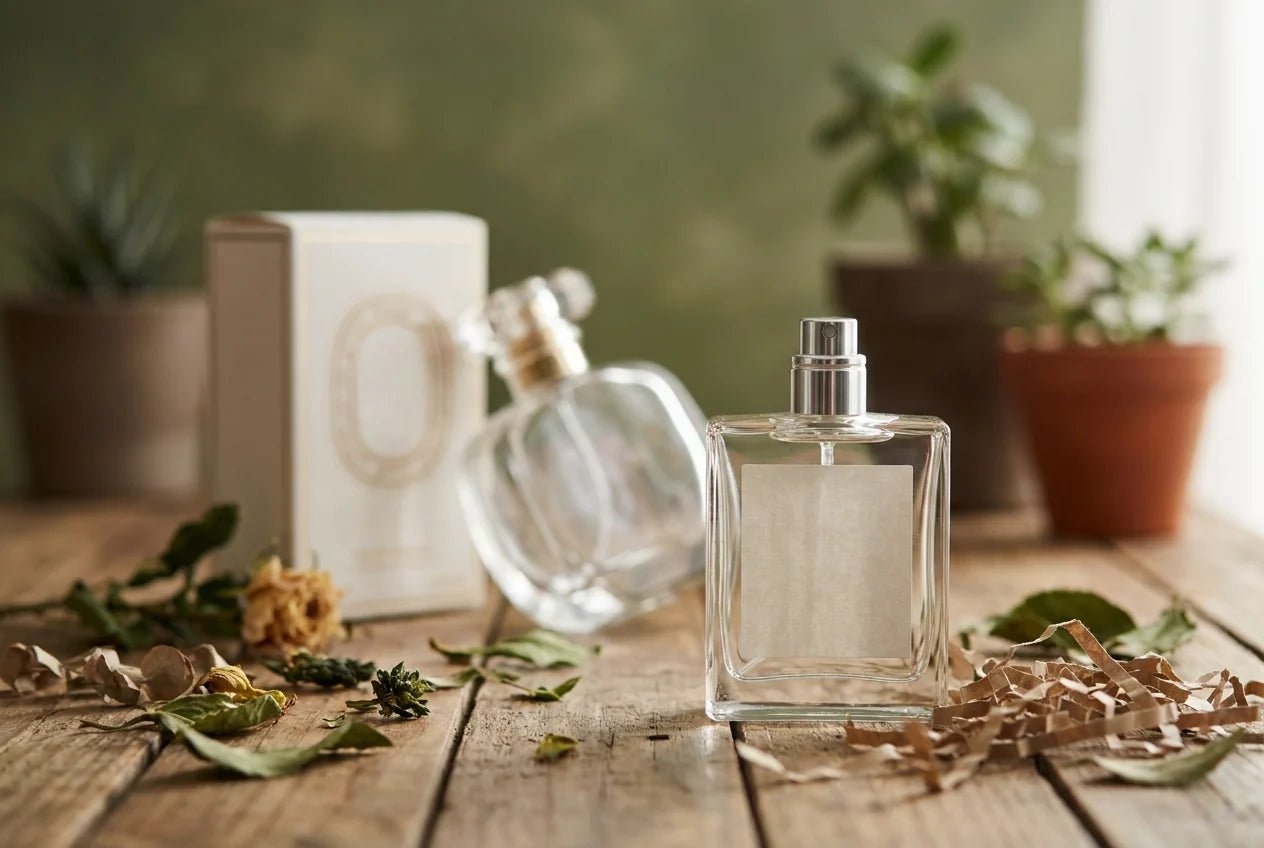
Every time you buy a luxury perfume, you are paying for far more than what is inside the bottle. The crystal-cut glass, the weighted magnetic box, the tissue-lined outer carton, the global distribution chain that carries it from a European factory to a prestige retailer near you: all of it comes with an environmental price tag that almost no one talks about.
Here is what the evidence shows. The carbon footprint of luxury fragrance is not driven by the scent itself. It is driven by over-engineered packaging and high-emission prestige logistics. And that is precisely where designer inspired perfume brands have a structural advantage, not just an incidental one.
In this post, we will break down the hidden environmental cost of luxury fragrance, examine why packaging is the industry's biggest sustainability problem, and explain how designer-inspired alternatives sidestep these issues by design. We will also look at what this means for UK buyers heading into 2026, and how Aroma Avenue fits into a genuinely greener approach to fragrance. If you care about sustainability but love great scent, this piece is for you.
The Hidden Carbon Cost of Luxury Fragrance
Life cycle assessment methodology is designed to capture exactly these non-product elements, packaging, logistics, and promotional infrastructure, as measurable contributors to total environmental impact. A peer-reviewed LCA published in Scientific Reports on a luxury fashion brand's event infrastructure applies this methodology to the non-product apparatus of prestige brands.
For luxury perfume, the imbalance is especially pronounced. The actual fragrance concentrate, the "juice," represents a small fraction of total packaged weight. The glass bottle, outer carton, tissue paper, decorative ribbon, and moulded inner tray typically account for the majority of material per unit sold. The scent is almost incidental to the weight you are carrying home.
Glass compounds the problem at two stages. Producing it requires high-temperature furnace processes that are energy-intensive by nature. Then its density drives up freight emissions directly: heavier shipments produce higher carbon output per unit transported, and luxury fragrance bottles are considerably heavier than functional packaging requires.
Prestige distribution logistics add further stages. A luxury fragrance typically passes through brand-owned warehouses, regional distributors, and high-end retail environments before reaching a UK counter. Each stage adds transport legs and handling infrastructure. The supply chain is deliberately tiered to protect brand positioning, and every tier has a carbon cost.
The consequence for UK shoppers is straightforward but rarely stated at the point of sale. When you purchase high quality perfumes from a luxury counter, you are paying for, and absorbing the environmental cost of, the entire infrastructure described above. Understanding how we make luxury affordable starts with recognising what luxury pricing actually funds.
Over-Engineered Packaging: Designed for Prestige, Not the Planet
That carbon footprint does not arise by accident. It is the direct consequence of a design philosophy that prioritises theatre over function.
A lightweight, robust bottle would protect fragrance concentrate perfectly well. Luxury packaging is not built around that requirement. It is built to signal status, justify a three-figure price point, and engineer an unboxing moment that reinforces brand desirability. The environmental cost is a by-product of that marketing function, not an oversight.
The physical evidence is straightforward: thick-walled glass bottles, heavy magnetic-closure outer boxes, custom-moulded foam inserts, and multi-layer printed cartons. None of these elements protect the product more effectively than simpler alternatives would. They exist to make the purchase feel significant.
The industry knows this, and consumers are responding. According to 2026 market data, 59% of luxury buyers now prefer refillable packaging, and over half are willing to pay a premium for recycled or renewable materials. Demand for change is unambiguous.
The materials to deliver that change already exist. Advanced polymers such as ionomer resins (Surlyn is one commercially available example) offer glass-like clarity and chemical stability at significantly lower weight, and they are better suited to refillable systems. The barrier to adoption is not technical; it is aesthetic. Heavy glass and elaborate secondary packaging are bound up in what luxury brands mean to their customers, and reformatting them risks diluting the prestige signal the entire pricing structure depends on.
This is the core problem. The gap between what the fragrance industry is technically capable of producing and what established luxury houses actually put on shelves is not an engineering gap. It is a brand-identity gap, and that makes it structurally resistant to change from within.
Why Designer-Inspired Perfume Brands Sidestep the Problem Structurally
The over-engineering problem documented in the previous section simply does not apply to designer-inspired brands.
Carrying no packaging heritage, no retail theatre obligations, and no brand-identity architecture to protect, these brands make straightforward, functional decisions about materials and presentation from the outset. There is no status signal to encode in a magnetic-closure box. The packaging exists to protect the product in transit, and that is where the brief ends.
The supply chain is equally leaner. Without department store concessions, branded retail environments, or tiered distributor networks, these brands move product through shorter chains with fewer handling and transport stages per unit. Every additional stage in a prestige distribution network adds vehicle movements, warehousing, and associated emissions. Stripping those stages out is not a workaround; it is the model.
Packaging weight compounds this advantage at scale. A 50ml bottle shipped in a minimal carton is meaningfully lighter than the same volume packaged in thick-walled glass with a moulded inner tray and a foil-printed outer box. Across thousands of units, that weight difference translates directly into lower freight emissions per shipment, a relationship that packaging life cycle assessments are designed to capture.
There is also no promotional infrastructure to account for. No celebrity campaign shoots, no elaborate launch events, no high-gloss counter displays. These activities are simply absent from the cost and emissions profile of the designer-inspired model.
None of this represents a reluctant trade-off. It is the structural reality of the designer-inspired business model. As our disclaimer on designer-inspired fragrances makes clear, this model is built around replicating scent profiles rather than brand identity, which is exactly what makes the leaner approach possible.
What This Means for UK Perfume Buyers in 2026
That structural advantage translates into a concrete, practical difference for UK buyers right now.
Awareness of sustainability as a purchasing consideration has grown noticeably, particularly among those exploring designer inspired perfume or comparing uk perfume brands online. Yet the specific link between packaging weight, distribution complexity, and carbon output is almost never surfaced at the point of sale. You see a price tag; you rarely see an emissions figure.
Regulation is beginning to close that gap. The UK's extended producer responsibility for packaging framework is designed to charge producers fees based on the volume and complexity of packaging they place on the market. Previously, taxpayers absorbed the majority of packaging waste disposal costs; that liability now sits with producers. For luxury fragrance houses whose packaging is deliberately heavy and multi-layered, this creates a progressive cost burden with nowhere to pass except the retail price.
With over half of luxury buyers already preferring sustainable packaging options, designer-inspired alternatives already deliver a structurally lower-impact product, and they do so at a fraction of the price. The sustainability benefit requires no additional spend from the buyer whatsoever.
For students, professionals, and value-conscious shoppers, this is a significant recalibration. Choosing a designer-inspired fragrance does not mean settling for a lesser scent; it means accessing the same olfactory experience while opting out of the packaging and logistics overhead that defines the luxury model. The scent profile you were drawn to is preserved. The environmental overhead is not.
UK buyers who want to understand how these choices connect can find further analysis and guidance across the Aroma Avenue fragrance blog. The structurally sound choice and the more affordable one, in this case, are the same choice.
How Aroma Avenue Fits This Picture
Aroma Avenue puts this structural argument into practice directly. As a UK-based designer-inspired perfume brand, it offers 50ml from £24.95 and 100ml from £29.95, making long-lasting, high quality perfumes accessible to students, professionals, and value-conscious shoppers who would otherwise absorb the full environmental overhead of luxury pricing.
That supply-chain logic applies directly to Aroma Avenue's model: fewer distribution legs means a leaner footprint per bottle delivered.
Packaging follows the same logic. The product at Aroma Avenue is the scent, not the unboxing ritual. Functional presentation rather than theatrical packaging is not a shortcut; it is the environmentally rational choice that the wider industry is now trying to reach through refillable systems and lightweight materials. Aroma Avenue starts there rather than retrofitting toward it.
For shoppers who have identified a specific luxury fragrance they love but are uncomfortable with either the price or the packaging apparatus behind it, the brand offers a direct route to the same scent character. The fragrance profile is preserved; the prestige infrastructure around it is not.
It is also worth noting that retailers and stockists exploring why stock Aroma Avenue encounter the same structural proposition from a commercial angle: a leaner supply chain and functional packaging translate into a more straightforward distribution model for partners as well as end buyers.
For sustainability-minded UK buyers, choosing Aroma Avenue is not a values trade-off. It reflects precisely the structural thinking that the fragrance industry is increasingly identifying as the correct direction of travel.
The Sustainability Argument Isn't Just About Packaging
The structural case for designer-inspired perfume extends beyond what ends up in the recycling bin.
Fragrance ingredients carry their own environmental footprint, and it is often overlooked. Natural extracts, rose absolute, oud, sandalwood, jasmine concrete, are commonly associated with substantial land use, significant water consumption, and complex agricultural supply chains before a single millilitre reaches a blending house. The fragrance industry's ongoing examination of synthetics versus naturals is an active research area; the environmental case for well-formulated synthetic blends is gaining traction, though it varies by ingredient and source.
Designer-inspired perfumes, including those across Aroma Avenue's women's collection, generally rely on high-quality synthetic and blended formulations that replicate luxury scent profiles accurately without demanding the same volumes of rare or high-impact natural raw materials.
Longevity adds a further dimension. A long-lasting formula means fewer reapplications per day and slower depletion overall, which reduces how many bottles a person buys and disposes of across a year. A fragrance that fades within two hours effectively multiplies its own environmental cost through accelerated replacement. Resource efficiency per wear matters in the same way fuel economy per mile does.
Aroma Avenue's focus on long-lasting performance is therefore environmentally relevant, not just commercially sensible. A bottle with strong projection and staying power has a lower per-wear footprint than one requiring constant top-ups.
These ingredient and longevity factors compound the packaging and logistics advantages covered earlier, building a fuller picture of where the environmental gains come from.
The Greener Choice Is Already in Front of You
That cumulative case is the conclusion the evidence has been building toward throughout this piece.
That consumer demand, already documented above, makes the gap starker still: designer-inspired alternatives already deliver a meaningfully lower-impact product at a fraction of the price. The sustainable option, in this category, is also the affordable one. Designer-inspired brands are built differently from the ground up, which means the lower environmental footprint is not a marketing claim; it is a consequence of how the business operates.
For UK buyers looking for high quality perfumes that reflect their values, the practical conclusion is straightforward. Choosing a designer-inspired fragrance is not a compromise on quality or experience; it is the structurally sounder decision, grounded in where the emissions actually come from.
Aroma Avenue's unisex fragrance range offers a direct starting point, with 50ml from £24.95 and long-lasting formulations built to match the scent profiles of luxury originals.
As the fragrance industry's sustainability conversation accelerates, the structural advantages that designer-inspired brands have always held are becoming easier to see and harder to ignore. Conscious consumers are not waiting for luxury houses to catch up; they are already making the more logical choice.
Conclusion
The case for designer-inspired fragrance as the more sustainable choice rests on structural reality, not marketing. Luxury perfumes carry hidden environmental costs baked into their prestige packaging, complex supply chains, and distribution overhead. Designer-inspired alternatives sidestep these problems entirely by operating with leaner, more efficient models from the start. The result is a product that is genuinely lower impact and significantly more affordable.
For UK buyers in 2026, the decision is clear. You do not have to choose between smelling exceptional and making a responsible purchase. These goals now point in the same direction.
Explore Aroma Avenue's full range of designer-inspired fragrances and find your next signature scent without the environmental baggage or the luxury markup. The greener, smarter choice is already available; it simply takes one decision to make it yours.




Leave a comment
This site is protected by hCaptcha and the hCaptcha Privacy Policy and Terms of Service apply.