

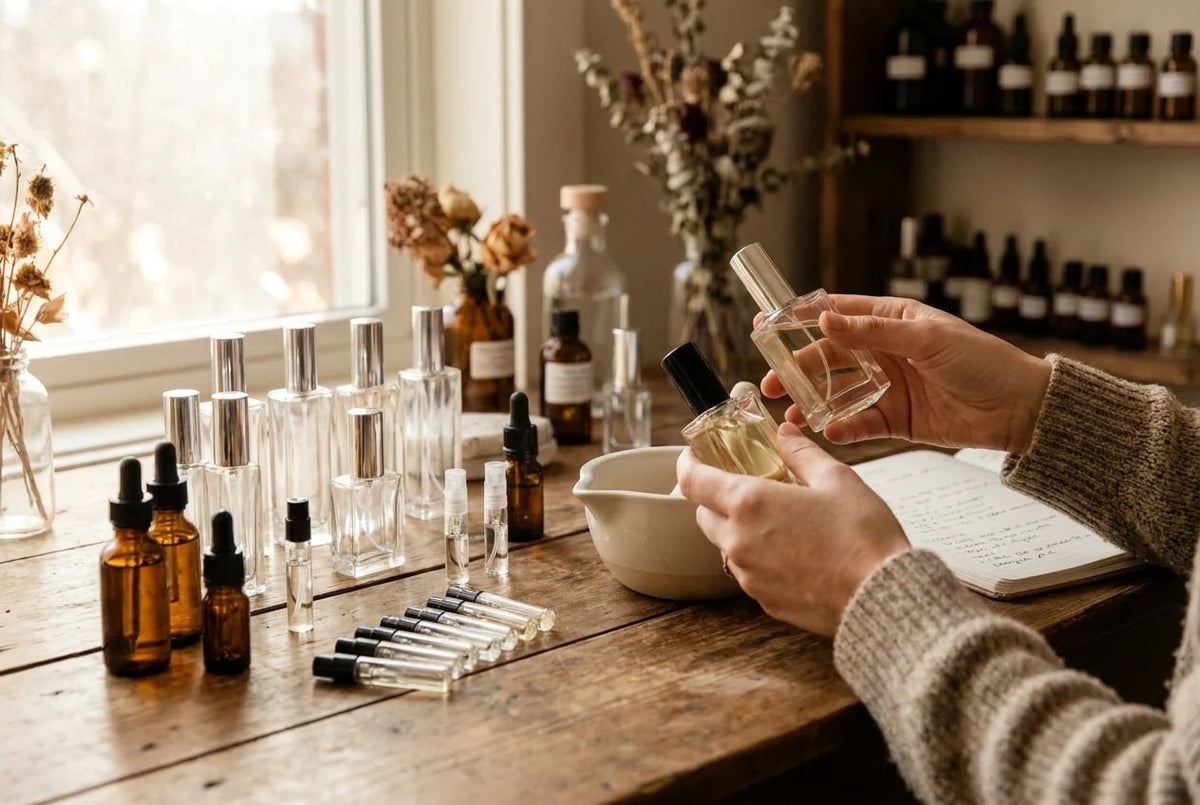
What if the secret behind those jaw-dropping, impossibly complex perfumes at the Chanel counter wasn't a single bottle at all? What if it was two? Fragrance layering is the technique luxury houses have quietly used for decades to create their most exclusive, long-lasting scents, and now it's completely within your reach, even on a tight budget.
Here's the exciting part: you don't need to spend £200 on a single designer bottle to smell extraordinary. By combining two carefully chosen perfume alternatives, you can build something richer, more personal, and longer-lasting than almost anything sold off a department store shelf, and keep the total bill under £60.
In this beginner-friendly guide, you'll learn exactly how fragrance layering works and why even Vogue and Harrods are talking about it. You'll discover which scent families pair beautifully together, get a simple step-by-step method to follow, and find three ready-to-try combinations using Aroma Avenue's designer-inspired fragrances. By the end, your signature scent won't be something you bought. It'll be something you created.
What Is Fragrance Layering and Why Do Luxury Houses Use It?
Fragrance layering is simply the deliberate act of applying two or more scents to your skin, either at the same time or in sequence, so they merge into a single blended result. Think of it less like wearing two perfumes and more like mixing two paint colours: what lands on your skin is something new, something neither bottle could produce alone.
The technique is not a modern shortcut. The fine-fragrance houses whose bottles line the counters at places like Harrods have always built their most complex, exclusive scents by blending multiple fragrance concentrations and olfactory families, which are groupings of related scent ingredients such as florals, woods, and spices. When you layer two bottles yourself, you are applying exactly the same creative principle, just with your own two hands rather than a perfumer's laboratory.
Vogue now covers fragrance layering as a mainstream beauty trend, and the Global Wellness Summit includes it in its trend forecasting. This is no longer insider knowledge held by industry professionals; it has moved firmly into everyday beauty culture.
It is worth drawing a clear line between accidental layering and intentional layering. Accidental layering happens when yesterday's scent lingers under today's application, usually with unpredictable or muddy results. Intentional layering means choosing two fragrances from compatible scent families before you spray, so the combination is planned rather than coincidental.
Designer-inspired fragrances are particularly well suited to this approach. Because they are built around a focused, recognisable scent profile rather than the deliberately opaque complexity of some niche perfumes, they behave predictably when combined. You can explore the full range to identify complementary profiles, or go straight to a bundled set to start experimenting straight away.
Why a Layered Combination Outperforms Even the Best Luxury Fragrances
So now you know what layering is, here is why it genuinely beats reaching for a single expensive bottle.
Your scent becomes unreplicable. Every person who buys a luxury fragrance wears the same formula. When you layer two bottles in your own chosen ratio, the combination is yours alone. Slightly more base one morning, an extra spray of the top layer the next: the result shifts in ways no single bottle, regardless of price, can replicate or compete with.
Longevity improves because chemistry works in your favour. A base-note-heavy scent contains heavier molecules, musks, vanilla, woody resins, that IFF Senior Perfumer Nelly Hachem-Ruiz confirms anchor a fragrance to the skin over time. Apply that richer scent first, then layer a lighter scent on top, and the base acts as a slow-release foundation. Both fragrances last longer together than either would alone.
Sillage evolves rather than simply fading. Layering a scent with strong projection over a quieter base creates a trail that changes across the day: the brighter top notes open the blend, then gradually give way to the warmer base underneath. That shifting, evolving character is a hallmark of high end perfumes costing hundreds of pounds. Here, it is a natural consequence of the technique.
The cost argument is straightforward. Two 100ml bottles from Aroma Avenue come to under £60. A single 100ml from a premium luxury house routinely costs £150 to £300 or more. You get a more personal, longer-lasting result for less than a third of the price.
There is one thing worth noting: sources like Harrods and Vogue cover layering as a technique, but they stop short of explaining how to achieve the same result affordably. That is precisely the gap How We Make Luxury Affordable is built to fill, and exactly what the rest of this guide addresses.
Fragrance Families: Which Scents Actually Work Together?
So you know layering is worth trying. The next question is obvious: which scents can you actually put together without the result smelling like a chemist's bin?
It starts with the four core fragrance families.
Florals are built around flower notes such as rose, jasmine, and lily of the valley. Fresh and citrus scents are light and energetic, covering bergamot, lemon, and aquatic accords. Woody or woody-aromatic fragrances are warm and grounding, anchored by sandalwood, cedarwood, and vetiver. Orientals (sometimes labelled amber) are rich and enveloping, built on vanilla, resins, warm spices, and incense.
Which families pair well?
Think of it as complementary contrast rather than similarity.
Florals sit beautifully alongside musks and soft woods, which give them depth without competing
Citrus and fresh scents lift heavy orientals, cutting through the richness and adding brightness in the opening hour
Vanilla-based orientals deepen woody fragrances, adding warmth to what might otherwise feel austere
Oud-forward scents are unusually versatile; they anchor almost any family layered on top
The shared notes shortcut
Before buying, check both fragrance descriptions for overlapping dominant notes. If two perfumes both feature sandalwood, jasmine, or amber prominently, they are very likely to merge cleanly rather than fight each other. Shared notes act as a bridge between the two bottles.
Pairings to avoid as a beginner
Two heavy orientals together tend to amplify intensity rather than balance it. Likewise, two sharp citrus scents can turn abrasive. As a rule, one scent should anchor and one should lift.
Designer-inspired fragrances, including the latest additions to the Aroma Avenue range, are typically described with clear family classifications, which makes it straightforward to research compatibility before you spend anything.
How to Layer Perfume: A Step-by-Step Method
Once you know which scents belong together, the application itself is straightforward. Follow these five steps and you will get a clean, long-lasting blend every time.
Step 1: Prep your skin first
Apply fragrance to clean, moisturised skin. A layer of unscented body lotion before you spray creates a slightly occlusive surface that research confirms slows fragrance evaporation from skin, keeping your blend performing longer. Scented lotions are off the table here; they introduce a third variable that can muddy the combination.
Step 2: Apply the base layer
Spray your heavier scent (woody, oriental, or musky) two to three times on pulse points: inner wrists, neck, inner elbows. These spots radiate heat, which gently diffuses the fragrance outward. Wait ten to fifteen seconds before moving on. You are giving the base notes time to settle on the skin rather than competing with the next scent the moment it lands.
Step 3: Add the top layer
Spray your lighter scent (floral, fresh, or citrus) over or near the same pulse points. The warmth of those areas does the blending work for you, merging both scents into a single, evolving trail rather than two separate smells sitting side by side.
Step 4: Let it breathe
Do not rub your wrists together. It is a common habit, but the friction breaks down volatile top notes prematurely and flattens the sillage. Leave the blend to merge on its own for a minute or two.
Step 5: Adjust and record
Start with equal sprays of each bottle, then experiment. Extra base gives you something richer and more evening-appropriate; extra top layer keeps it lighter for the office. A quick phone memo after each attempt saves you rebuilding the combination from scratch. If you want an easy way to trial different combinations without committing to full bottles, Create Your Perfect Bundle and test the ratios before settling on a favourite pairing.
Three Starter Combinations to Try for Under £60
Now you know the method, here are three ready-made starting points to put it into practice.
Combination 1: The Soft Floral Musk
Layer a white floral designer-inspired scent over a clean musk base. The musk anchors the blend close to the skin while the floral lifts it just enough to leave a soft, lingering trail. It is the ideal pairing for the office or daytime wear, gentle enough not to overpower a shared space but persistent enough to last through the afternoon without reapplying.
Total spend: two 100ml bottles from Aroma Avenue at £29.95 each comes to £59.90, right at the budget ceiling.
Combination 2: The Warm Woody Oriental
Apply a sandalwood or cedarwood-forward scent first, then layer a vanilla-amber oriental on top. The wood grounds the sweetness of the oriental and stops it from turning cloying, while the vanilla deepens the woody drydown into something genuinely complex. The result has real sillage and staying power, the kind of presence you would expect from high end perfumes priced at £150 or above.
Total spend: two 100ml bottles at £29.95 each, or mix sizes using a 50ml at £24.95 and a 100ml at £29.95, bringing the total to £54.90.
Combination 3: The Fresh Citrus Lift
Take a heavy oud-forward or woody base and spray a sharp citrus or neroli scent over the top. The citrus dominates for the first hour or two before fading back, allowing the woody base to take over. That two-phase progression is something no single bottle can replicate.
Total spend: two 100ml bottles at £59.90, or two 50ml bottles at £49.90.
The Aroma Avenue range spans all three fragrance families covered here, so you can build your entire first layering wardrobe in one place. Log in to your Aroma Avenue account to save favourites as you browse, rather than juggling tabs across multiple retailers.
Common Layering Mistakes and How to Avoid Them
Once you have a combination you love, it is easy to push further and accidentally undo all the good work. These are the five mistakes beginners make most often, and how to sidestep each one.
Using too many fragrances at once. Three scents is the absolute ceiling for a coherent result. Beyond that, the blend loses any identifiable character and becomes olfactory noise. Start with two. Get comfortable with how they interact before you even consider adding a third.
Picking two dominant scents. If both fragrances have heavy sillage and are fighting for the same olfactory space, say two intense orientals worn together, they amplify each other's weaknesses rather than hiding them. Every successful pairing has a lead and a supporting act. One scent anchors; the other lifts.
Spraying in the wrong order. Apply the lighter scent first and the heavy base will smother its top notes before they have a chance to open. The base always goes on first. It anchors the blend to your skin, and the lighter scent layers over the top where it can actually be perceived.
Assuming perfume alternatives mean lower quality. Designer-inspired fragrances are formulated to replicate the olfactory profile of luxury originals. They share the same fragrance family DNA, which means they layer with exactly the same predictability. That consistency is not a compromise; it is a genuine advantage when you are trying to build something new and repeatable.
Abandoning a combination after one poor result. Fragrance chemistry responds differently to every person's skin pH, warmth, and natural scent. A pairing that clashes on a friend can work beautifully on you. If a blend disappoints, adjust the ratio or the application point before you write it off entirely. Early experiments are calibration, not failure.
Start Layering: Your Signature Scent Is Two Bottles Away
Once you know the pitfalls to avoid, the rest is simply getting started.
Fragrance layering is the same method luxury houses use to build their most complex, exclusive scents. The difference is you can achieve it with two designer-inspired bottles for under £60. Three principles are all you need to remember: choose complementary fragrance families, apply your base scent first, and begin with two bottles before adding a third.
The reason browsing the Aroma Avenue range by fragrance family makes such a practical starting point is that these perfume alternatives are built around the same olfactory DNA as the best luxury fragrances. That shared foundation is precisely what makes them reliable raw materials for layering; the scent profiles are clean, focused, and predictable when combined.
To keep your total spend well within budget, start with two 100ml bottles at £29.95 each. That is £59.90 for a combination no one else on earth will wear in quite the same way, on quite the same skin, in quite the same ratio as you.
Which brings it back to the only argument that really matters. The scent you build through layering is genuinely yours. It cannot be replicated by a single bottle, however expensive. It will not appear on anyone else's wrists. And it costs less than a night out, not less than a luxury fragrance.
That is the whole case for fragrance layering, made in two bottles and a bit of intention. Pick your families, apply base first, and see what you create.
Conclusion
Fragrance layering is not a luxury secret anymore. With two complementary bottles, a clear understanding of fragrance families, and a simple base-first application method, you can build a signature scent that outperforms anything sold in a single bottle, at any price point.
The key takeaways are straightforward: complementary families blend predictably, base notes anchor everything that follows, and two bottles are genuinely enough to start. Your skin, your ratio, your result.
At under £60 for two 100ml bottles, the investment is modest. The outcome is a scent that is entirely your own, unrepeatable and unrecognisable as anything off a shelf.
Browse the Aroma Avenue range by fragrance family, pick your two starting notes, and apply them tonight. Your signature scent is not something you find. It is something you build, and you are two bottles away from it right now.


Leave a comment
This site is protected by hCaptcha and the hCaptcha Privacy Policy and Terms of Service apply.