

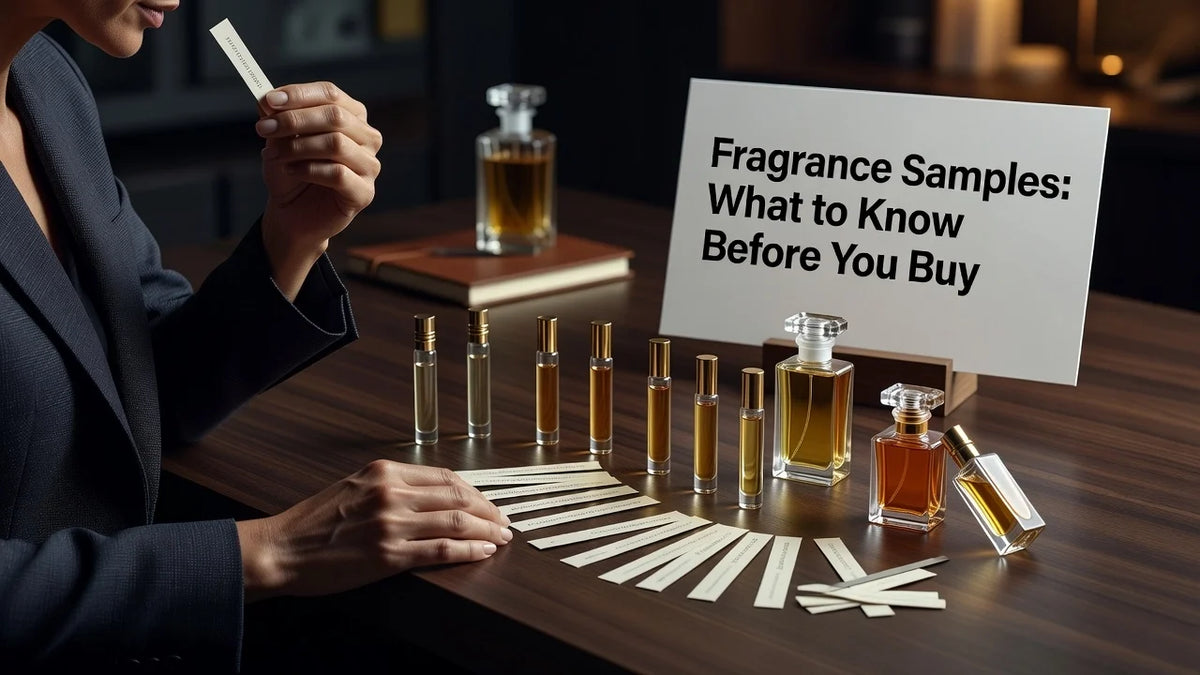
Have you ever spent a small fortune on a full bottle of perfume, only to wear it twice before deciding you actually hate it? Yeah, we have all been there. The good news is that there is a smarter way to shop for your next signature scent, and it starts with fragrance samples.
Fragrance samples are small, affordable versions of your favorite (or soon-to-be favorite) perfumes and colognes. They give you the chance to test a scent properly before committing to a pricey full-size bottle. And trust me, there is a lot more to know about them than you might think.
Whether you are just starting to explore the world of fragrance or you are tired of making expensive mistakes at the perfume counter, this guide is for you. We are going to walk you through everything you need to know before buying fragrance samples, including where to find them, what to look for, and how to make the most of each one. Let's dive in!
What Fragrance Samples Actually Are (And Why They Matter)
Fragrance samples are small-format quantities of perfume, typically ranging from 1ml to 10ml, packaged in miniature vials or travel-sized bottles. They contain the exact same formulation as a full-size bottle, so what you smell is genuinely what you'd be buying. Think of them as a low-risk way to road-test a scent properly before committing your money to something you might wear once and shove to the back of a drawer.
Here's something that surprises a lot of beginners: the same perfume can smell completely different on two people standing side by side. This isn't just subjective opinion; it's biochemistry. Your skin's pH level, natural oils, body heat, and even your diet all interact with fragrance molecules to create a unique scent profile. A woody, warm fragrance that smells incredible on your friend could turn sharp or flat on your skin within an hour. This is exactly why fragrance samples make finding your perfect scent more pleasurable rather than leaving it to guesswork. A quick sniff in a shop simply isn't enough; you need to wear a scent through its full dry-down to know if it really works for you.
This testing behaviour is firmly mainstream. The global perfume market is projected to hit USD 64.1 billion in 2026, with direct-to-consumer sampling growing at 16.2% annually as the fastest-expanding channel in the industry. Millions of shoppers are actively choosing to test before they buy, and the market has shifted to accommodate that. According to research, what fragrance samples really offer is a bridge between a product and your personal preferences, and smart shoppers worldwide are crossing that bridge every day.
Contrast that with blind buying, which means purchasing a full bottle without testing it first. In the UK, returning a worn fragrance is practically impossible once it's been opened and used, leaving you stuck with something that doesn't suit you. Designer bottles can cost anywhere from £80 to well over £200, making a wrong purchase a genuinely painful mistake.
There are two main routes for sampling: original designer decants, which are small portions of genuine branded fragrances that can still cost a fair amount, and designer-inspired alternatives, which replicate the scent profiles of luxury fragrances at a fraction of the price. We'll explore both in detail shortly.
Why Blind Buying a Full Bottle Is a Gamble Worth Avoiding
Let's be honest: spending £80 to £300 or more on a fragrance you have never properly tested is a significant financial risk. Most UK retailers will not accept returns on opened or unsealed perfume, which means if you spray a new bottle and decide you hate it, you are stuck with it. A Scento study found €780 million worth of perfume sitting completely unworn across Europe, and blind buying is the primary reason. That is a staggering amount of wasted money from people who simply guessed wrong.
There is also a chemistry problem that catches many beginners off guard. Every fragrance moves through three distinct stages: top notes hit first and fade within 15 to 30 minutes, heart notes emerge through the middle of the wear, and base notes form the deep, lasting dry-down that stays with you for hours. When you sniff a paper strip in a shop, you are only catching those fleeting top notes. The scent you will actually wear all day, the base, is something entirely different. This is why a quick sniff is never enough to make an informed decision.
Online fragrance shopping is growing rapidly, with e-commerce sales expanding at nearly 14% annually. More people than ever are buying scents they have genuinely never smelled, making fragrance samples a practical necessity rather than a luxury extra.
Gifting makes this even trickier. The fourth quarter alone accounts for roughly 40% of annual fragrance sales, when blind gift purchases are at their peak. Buying someone a scent they already own or simply dislike is a common and costly mistake that testing first easily prevents.
With cost-of-living pressures still very real in 2026, impulse luxury purchases are harder to justify, especially for students and young professionals. Sampling is simply the smarter financial approach.
Designer-Inspired Fragrances vs. Originals: What Is the Difference?
If you have spent any time browsing fragrance communities online, you have probably come across the term "inspired perfume" and wondered exactly what it means. There is a lot of confusion around this, so let us clear it up properly.
Designer-inspired fragrances are independently formulated perfumes created to replicate the scent profile of a luxury original. They are not counterfeits, not fakes, and not illegal copies. A perfumer analyses the target fragrance, identifies its key notes and accords, and then creates a new composition using similar aroma chemicals. The result is a scent that closely mirrors the original without copying any brand name, logo, or packaging. As explored in this detailed breakdown of inspired vs original perfumes, these products are honest, independently manufactured alternatives that openly state what they are inspired by.
This brings us to the most important distinction in this space: inspired fragrances are completely different from counterfeits. Counterfeit perfumes fraudulently use a brand's trademarks, logos, and packaging to trick buyers into thinking they are purchasing the genuine product. That is both illegal and genuinely dangerous, as counterfeit products often contain unregulated ingredients. Inspired fragrances make no such false claims whatsoever. They are marketed transparently, which is precisely what makes them legitimate.
The legal foundation here is straightforward. In most jurisdictions, including the UK, a scent profile cannot be trademarked. Brand identity and packaging can be protected, but the fragrance formula itself cannot. This is why the inspired fragrance market is not just tolerated; it is a recognised and growing segment of a global industry valued at over USD 62 billion.
That said, not all inspired fragrances are created equal. Longevity, projection, and scent accuracy vary considerably depending on the manufacturer, the concentration used, and the quality of ingredients sourced. This is where brand reputation genuinely matters.
Aromaavenue.uk is a UK-based example of the inspired model done properly: high-concentration, long-lasting formulations starting from £24.95 for 50ml. For students, professionals, and anyone who wants a genuine luxury scent profile without the brand premium attached, it is a smart and affordable entry point into quality fragrance.
The One Thing Most People Overlook: Fragrance Concentration and Longevity
Here is something that catches a lot of first-time fragrance buyers off guard: not all versions of the same scent perform equally, and the difference comes down to concentration.
Every fragrance is built around a percentage of fragrance oil dissolved in alcohol and water. That percentage determines how long it lasts, how far it projects, and how it evolves on your skin throughout the day. The four main tiers work like this: Eau de Cologne (EdC) sits at around 2 to 4% fragrance oil, making it the lightest and freshest option but also the shortest-lasting. Eau de Toilette (EDT) runs from 5 to 15% and typically lasts around 3 to 6 hours before it fades noticeably. Eau de Parfum (EDP) steps up to 15 to 20% concentration and comfortably delivers 6 to 10 hours of wear. Parfum or Extrait de Parfum tops out at 20 to 40% fragrance oil, with some formulations lasting 8 hours or more with deep, skin-close sillage. You can find a clear breakdown of how these tiers compare in real wear conditions over at Scento's guide to perfume longevity.
This is not just nerdy fragrance trivia. It has become the defining conversation in the market right now. In 2026, the EDP versus Extrait decision is front and centre for fragrance buyers, with consumers actively choosing higher-concentration formats because they want performance that lasts through a full working day or evening. EDP has become the go-to format at most beauty retailers precisely because it hits the sweet spot between projection and longevity.
The problem is that luxury brands charge a steep premium at EDP and Parfum tiers. High-concentration originals can cost well over £150 to £300 per bottle, putting them out of reach for most students and everyday shoppers.
This is exactly why you should always check the concentration of any sample you are testing. A 1ml EDT sample of a scent will not show you how the EDP version behaves across a full day; the dry-down, depth, and staying power are genuinely different experiences, not just longer versions of the same thing.
At Aromaavenue.uk, the formulations are built to deliver EDP-level longevity and performance. That means you are not making a compromise when you pick up a 50ml bottle from £24.95 or a 100ml from £29.95. You are getting the staying power that modern fragrance buyers actually expect, without the luxury price tag attached.
Where to Find Fragrance Samples in the UK
Now that you know what fragrance samples are and why testing matters, the next step is knowing exactly where to find them in the UK. The good news is that you have more options than ever before.
1. Aromaavenue.uk: The Smartest Starting Point
If you want to explore luxury scent profiles without the anxiety of overspending, Aromaavenue.uk is genuinely the best place to begin. Designer-inspired fragrances are available in 50ml from £24.95 and 100ml from £29.95, meaning the 50ml size essentially functions as an extended trial. You get enough product to wear across dozens of occasions, across different seasons and moods, before deciding whether a scent truly suits your lifestyle. That is a completely different experience from a quick spritz at a shop counter, and at a fraction of what a luxury original would cost.
2. Department Store Counters (John Lewis, Selfridges, Boots)
In-store counters let you spray original fragrances directly on your skin for free, which is genuinely useful for a first impression. The limitations are real, though. Testing is restricted to whatever each store currently stocks, take-home samples are rarely offered, and the retail environment can feel pressured. Use these counters as a first contact point, then pursue a longer evaluation elsewhere.
3. Brand-Direct Discovery Kits
Some luxury houses sell official sample sets through their own websites, typically priced at £10 to £30 for a small selection of 1ml to 2ml vials. These are brand-authenticated, but the cost per ml is high and selection is limited to one house's portfolio.
4. Fragrance Decant Platforms
UK-based decant retailers like Scented Samples offer authenticated vials of niche and designer originals, which is particularly useful for hard-to-find scents. Bear in mind that because original fragrance prices are reflected in the decant cost, individual vials can run to £10 to £20 each.
5. Fragrance Subscription Boxes
Services like Scentbird and Scentbox offer monthly vials on a subscription model and are a solid concept for consistent sampling. However, both are primarily US-based, and UK subscribers may face import delays or additional customs fees post-Brexit. Always check for domestic UK alternatives before committing to a subscription from abroad.
How to Actually Test a Fragrance Sample (Most People Do It Wrong)
Getting a fragrance sample is only half the battle. How you actually test it determines whether you make a smart decision or end up wasting money on something that smells completely different once you are wearing it properly. Most people get this part wrong, and it costs them.
1. Apply to pulse points only
Spray or dab your sample onto your wrists, the sides of your neck, or your inner elbows. These spots generate body heat, which activates the fragrance molecules and projects the scent exactly as the perfumer designed it. A quick sniff from the vial tells you almost nothing useful. Your skin chemistry, warmth, and natural oils are all part of how the fragrance is meant to perform.
2. Never rub your wrists together
This is probably the single most common mistake people make. Rubbing creates friction and heat that breaks down the top notes before they have had a chance to develop. You end up smelling a distorted version of the opening rather than the real thing. Spray it on, then simply let it dry naturally.
3. Wait at least 30 minutes before forming any opinion
Top notes evaporate within 5 to 15 minutes and are the least representative part of a fragrance. That sharp, boozy, or overly sweet hit you get right after applying is mostly alcohol and the most volatile elements burning off. Give it time. Learning how to test perfume properly before buying is the difference between a purchase you love and one you regret.
4. Test no more than two or three fragrances per session
Your nose becomes unreliable quickly after repeated exposure, a phenomenon known as olfactory fatigue. Once it kicks in, every fragrance starts to blend together and your judgement goes out the window. Keep sessions short and focused.
5. Wear it for a full day before deciding
Check in at the two-hour, four-hour, and eight-hour marks. This tells you how the scent evolves through its heart and base notes, how long it actually lasts, and whether you still enjoy it once the opening has faded completely. A fragrance that smells incredible at first but becomes flat or unpleasant by midday is not the right one, no matter how good that initial impression felt.
How to Choose a Fragrance Online Without Smelling It First
Buying fragrance online without a test strip in hand feels risky, but with the right approach, you can make confident, well-informed choices almost every time. Here are five practical strategies to guide you.
1. Start with scent families you already know you love
Think about fragrances you have genuinely enjoyed wearing or smelling on others. Do they tend to be light and citrusy, soft and floral, deep and woody, spiced and oriental, or sweet and food-like (gourmand)? Identifying your cluster first gives you a reliable filter for everything else. Fragrantica's Search by Notes tool lets you include notes you love and exclude ones you want to avoid, making it a genuinely useful starting point before you commit to anything.
2. Trust community reviews over brand marketing copy
Brand descriptions are written to sell a feeling, not to tell you how long a fragrance actually lasts on your skin. Fragrantica hosts over 2.5 million reviews from 1.9 million registered members, with real-wearer votes on longevity and sillage (how far the scent projects). These two metrics are far more useful when buying blind than any poetic product description.
3. Use "inspired by" descriptions as a reference point
If a product page states a fragrance is inspired by a specific luxury original and you have worn that original before, you immediately have a sensory anchor. You know roughly what to expect in terms of character, mood, and style. This is one of the biggest practical advantages of shopping designer-inspired fragrances.
4. Look for transparent product listings
Reputable brands will clearly list the concentration (EDP, EDT, Extrait), a full note breakdown across top, heart, and base layers, and an expected longevity range. If a listing only offers vague words like "mysterious" or "addictive" without any specifics, that is a signal to look elsewhere.
5. Use personalisation tools to narrow your options
In 2026, more discovery platforms and brands are offering filters by mood, occasion, and scent family. Gen Z is now the highest fragrance-consuming demographic, and the industry has responded with more tailored discovery experiences. Use these tools to shortlist before you even consider ordering a sample size.
Why Fragrance Samples Make Particular Sense for Students and Young Professionals
If you are a student or early-career professional, the fragrance world was not really built with your budget in mind. Luxury fragrance accounts for 65.25% of total fragrance market value, yet the bottles driving that dominance are priced between £80 and £300 or more. That is not a minor inconvenience; it is a structural barrier that makes testing, exploring, and building a scent wardrobe genuinely difficult on a student loan or starting salary.
Here is the twist though: Gen Z is currently the most fragrance-engaged generation on record, with 83% wearing fragrance regularly and the average young consumer owning between 8 and 12 different scents. This generation is not less interested in fragrance; it is more interested than any before it. The gap between that enthusiasm and the price of entry is exactly where fragrance samples and inspired alternatives become genuinely useful tools rather than consolation prizes.
Cost-of-living pressures make this calculation even clearer. When rent, food, and transport are all competing for a limited income, spending £150 on a single perfume bottle is simply not rational, regardless of how much you love the scent. The inspired fragrance model resolves this directly: the same scent profile, the same Eau de Parfum concentration, and dramatically lower spend that can be redirected somewhere it matters more.
Scent is also worth taking seriously as a professional asset, not just a lifestyle preference. Research consistently links personal presentation, including fragrance, to confidence and how others perceive you in professional settings. Smelling good is not superficial; it is a genuine part of how you show up.
Aroma Avenue's 50ml bottles from £24.95 are priced with exactly this audience in mind. At standard daily use, a 50ml bottle delivers well over a month of wear, making the per-day cost genuinely comparable to a daily coffee. That is a realistic ask for a student budget or an early salary, and it means you can rotate scents rather than committing everything to one bottle you might grow tired of within weeks.
Start Smart: Your Next Steps With Fragrance Samples
Sampling before spending is simply the smarter way to approach fragrance, and the good news is that doing so has never been easier or more affordable. With 73% of people more likely to buy a fragrance after testing it, the case for trying before committing is clear. Your nose, your skin chemistry, and your wallet will all thank you.
Inspired fragrances remain a category worth understanding properly. They are legally distinct formulations, not counterfeits, and brands like Aromaavenue.uk market them honestly as alternatives that capture a scent profile rather than copy a trademarked product. Quality in this space has improved significantly, and when you choose the right brand, the gap between inspired and original narrows considerably.
Here is your practical starting point: think of two or three luxury scents you already wear or are curious about, then search for their inspired equivalents at Aromaavenue.uk before spending more. Pay attention to concentration when comparing, as EDP will outlast EDT considerably. At this price point, a 50ml bottle effectively becomes an extended test, giving you enough wear across different occasions to know whether a scent truly suits you.
Browse the full range at Aromaavenue.uk, starting from £24.95, and find your perfect scent profile without the price tag that does not fit.
Conclusion
Finding your perfect scent does not have to be a gamble. Fragrance samples give you the power to test before you invest, saving you both money and disappointment. Remember the key takeaways: samples let you experience how a fragrance truly wears on your skin, they help you avoid costly full-bottle mistakes, and they open the door to discovering new scents you might never have considered otherwise.
Now it is your turn to put this knowledge to work. Start by ordering two or three samples of fragrances that genuinely interest you. Wear each one for a full day before making any judgments. Let your nose guide you.
Your signature scent is out there waiting to be found. With fragrance samples as your secret weapon, you are already one smart step closer to finding it.


Leave a comment
This site is protected by hCaptcha and the hCaptcha Privacy Policy and Terms of Service apply.