

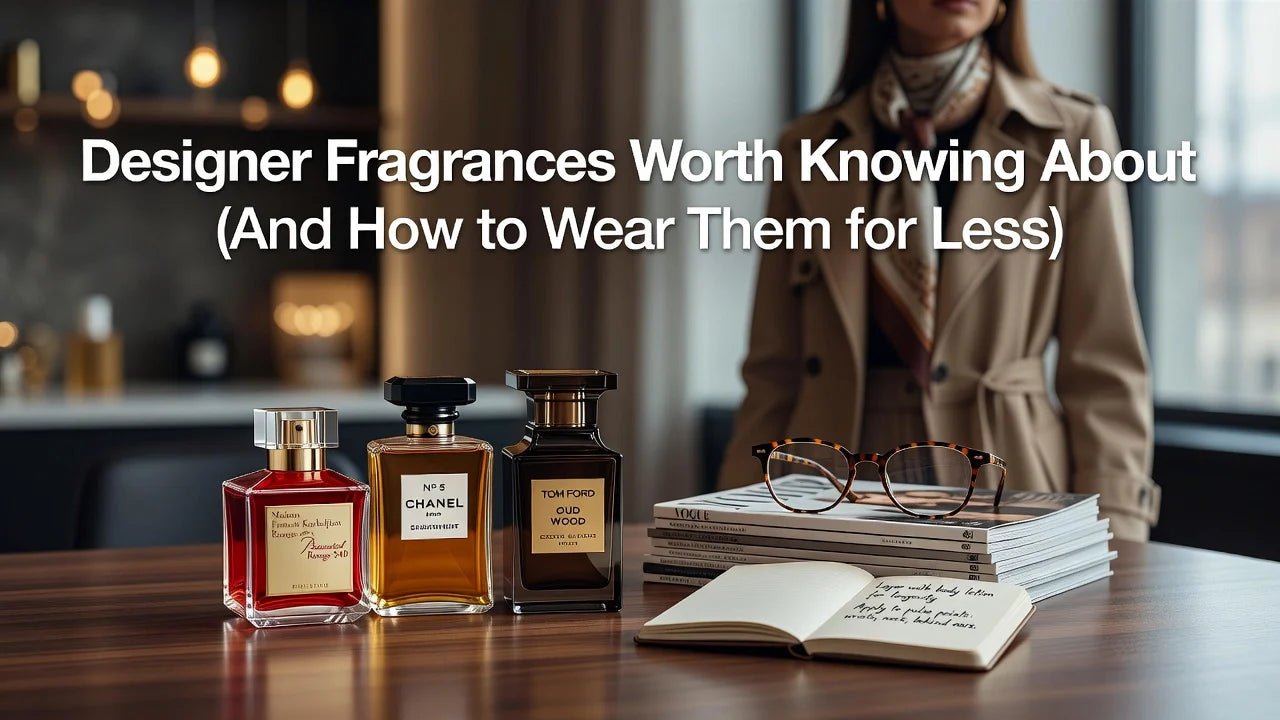
There's something undeniably magical about catching a whiff of a beautiful scent and immediately feeling more confident, polished, and put-together. But if you've ever browsed the fragrance counter at a department store, you know that magic can come with a seriously steep price tag.
Here's the good news: you don't have to drain your bank account to smell amazing. The world of designer fragrances is full of incredible options, and with a little know-how, you can enjoy them without the buyer's remorse.
In this post, we're breaking down some of the most talked-about designer fragrances worth adding to your collection, plus sharing some smart, budget-friendly ways to wear them without paying full retail price. Whether you're completely new to the fragrance world or just looking to expand your scent wardrobe, this guide was made for you. By the end, you'll know exactly which scents are worth your attention and how to get your hands on them for less. Let's dive in!
Why Designer Fragrances Still Dominate the Scent World
Designer fragrances aren't just holding their ground; they're actively driving one of the fastest-growing consumer markets on the planet. The global perfume market is valued at USD $64.1 billion in 2026 and is projected to reach $85.5 billion by 2035, and luxury designer houses are the engine powering that growth. In fact, luxury accounts for a remarkable 65.25% of total global fragrance market value, which tells you everything about why certain names carry so much weight on a shelf.
The corporate side of this story is equally fascinating. LVMH alone holds over 12.5% of global market share, with Chanel, Armani Beauty, and Estée Lauder close behind. That concentration of heritage, distribution power, and advertising budget is genuinely hard to compete with, and it explains why designer names feel so culturally embedded in the fragrance world.
Closer to home, UK consumers are spending seriously on scent. The UK fragrance market is projected to hit €4.18 billion in 2026, growing at 5.64% year on year, with Eau de Parfum leading at €1.90 billion in revenue alone.
But here's where things get interesting. A massive 88% of Gen Z consumers now say they prioritise scent quality over brand name. That is a genuine shift in what "designer" means to modern buyers. Add to that the fact that TikTok has completely replaced the department store counter as the place where fragrance conversations happen, and you start to see a market that is ripe for smart, quality-focused alternatives. According to luxury perfume market research, that appetite for premium scent experiences is only growing.
What Actually Makes a Fragrance 'Designer'
So what actually separates a "designer" fragrance from everything else on the shelf? It comes down to branding as much as bottled liquid. A designer fragrance is one created under the banner of an established luxury fashion or lifestyle house, where names like Chanel, Dior, YSL, Giorgio Armani, and Valentino carry decades of cultural weight. The scent isn't just a product; it's a wearable extension of the brand's identity, heritage, and creative vision. That's a powerful thing, but it's also worth understanding exactly what you're buying into.
The Craft Behind the Bottle
Every designer fragrance starts with a master perfumer, often called a "nose," working to a creative brief set by the fashion house's directors. These are highly trained professionals who blend synthetic aromatic molecules with natural ingredients to build complex, layered scents. Jacques Polge spent decades as Chanel's in-house perfumer; François Demachy has held that role at Dior since 2006. The artistry is real and genuinely impressive.
Concentration Levels Matter More Than You Think
One of the most practical things to understand is fragrance concentration. Eau de Toilette (EDT) contains roughly 5 to 15% aromatic compounds, while Eau de Parfum (EDP) runs between 15 and 20%, making it noticeably longer-lasting and more intense. The market is shifting clearly toward EDP formats, with the UK's EDP segment alone generating €1.90 billion in 2025 revenue, reflecting growing consumer demand for scents that actually last through the day.
Where Your Money Actually Goes
Here's the part that surprises most people. A significant chunk of the retail price on a designer fragrance pays for brand heritage, luxury packaging, advertising campaigns, licensing deals, and retailer margins, not the liquid itself. Industry estimates suggest the aromatic ingredients inside a £120 bottle can represent as little as 3 to 10% of the shelf price. As Forbes notes in its 2026 luxury trend report, consumers are actively rethinking what "luxury" in fragrance really means, and many are concluding that the scent experience matters far more than the logo. That shift in thinking is precisely what's fuelling the rise of designer-inspired alternatives, where the focus stays firmly on the fragrance itself.
The Designer Fragrance Families Every Shopper Should Know
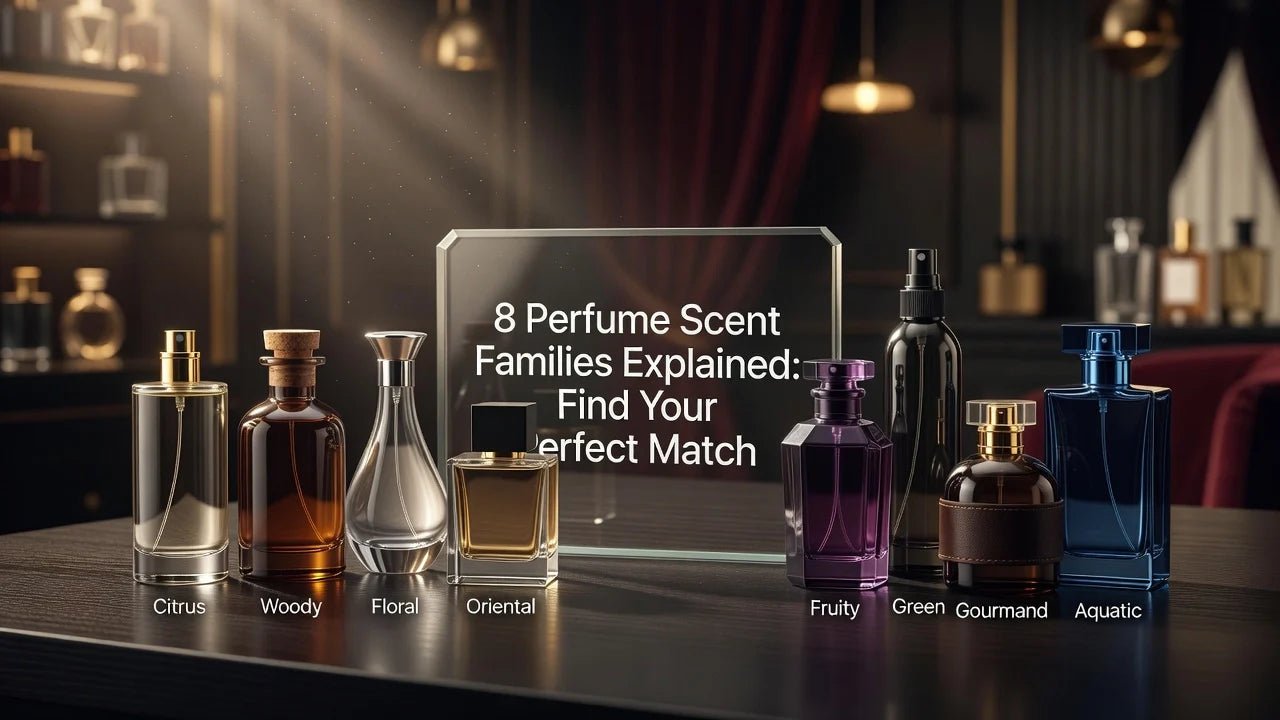
Not all designer fragrances smell the same, and that's kind of the whole point. The scent world is organised into distinct fragrance families, and knowing which one speaks to you makes shopping so much easier. Here's a quick guide to the five families you'll encounter most.
1. Floral: The Crowd-Pleasing Classic
Florals are the most recognisable designer category globally, built around notes like rose, jasmine, peony, and neroli. Houses like Chanel, Marc Jacobs, and Gucci have built legendary floral releases that continue to top bestseller lists year after year. The range within this family is surprisingly broad; some florals are soft and powdery, while others are bright, airy, and almost green. If you're just starting your fragrance journey, a floral is often the easiest entry point.
2. Woody and Oud: Warm, Resinous, and Luxurious
Woody and oud-based fragrances have surged in recent years, partly shaped by Middle Eastern influence on Western perfumery. Tom Ford, Initio, and Yves Saint Laurent lead this space with rich, resinous compositions that tend to last longer on skin. These are the kinds of scents that leave a room knowing you were there.
3. Aquatic and Fresh/Citrus: Clean, Confident, and Effortless
Fresh and aquatic fragrances absolutely dominate the men's designer market. Dior Sauvage, Giorgio Armani Acqua di Gio, and Bleu de Chanel are perennial bestsellers for good reason; they hit hard on first spray and work brilliantly in warmer weather. The aquatic category alone is valued at $4.8 billion globally and is growing fast.
4. Oriental and Amber: Rich, Sensual, and Long-Lasting
Orientals are the heavyweights of the fragrance world. Think Thierry Mugler's Angel, YSL Libre, or Valentino Voce Viva; deep, warm, and unapologetically bold. This family works beautifully in the evening or during the cooler autumn and winter months, and generally offers the best longevity of any category.
5. Unisex and Gender-Neutral: The Fastest-Growing Family
This is where the market is moving fastest right now. A remarkable 40% of all new fragrance launches in 2024 were gender-neutral, driven by Gen Z's preference for scents that reflect personality rather than gender norms. Houses like Maison Margiela, Byredo, and Le Labo helped pioneer this space, and the mainstream designer world is catching up quickly.
Knowing your preferred fragrance family makes it much simpler to shop smart, whether you're buying a designer original or exploring designer-inspired alternatives that capture the same DNA at a fraction of the cost.
The Designer Fragrances That Are Defining 2026
Now that you know your fragrance families, it helps to see exactly which designer scents are leading the conversation right now. These are the bottles people are buying, talking about, and searching for in 2026.
1. Dior Sauvage EDP
Sauvage has been sitting at the top of the men's fragrance charts for years, and 2026 is no different. It holds the title of the world's best-selling men's fragrance, and it's genuinely earned. The magic is in its simplicity: a clean, fresh bergamot opening that dries down into a warm, magnetic base built around Ambroxan. It works on a first date, at the office, and everywhere in between. That versatility is exactly why it's crossed every age group and demographic.
2. Chanel No.5 and Chanel Chance Eau Tendre
Chanel continues to own the women's segment with two very different but equally compelling options. No.5 is the classic, a powdery floral that has defined elegance for over a century. Chance Eau Tendre takes a lighter approach with grapefruit, jasmine, and white musk. It feels modern, effortless, and genuinely wearable every day.
3. YSL Black Opium EDP
Black Opium was rated the number one women's fragrance of 2026, and the hype is completely justified. Coffee, vanilla, and white florals combine into something rich, addictive, and perfect for evenings out. It has become a true signature scent for a generation.
4. Giorgio Armani Si Passione and Valentino Donna Born in Roma
These two represent the modern feminine EDP at its best. Confident, rich, and built to last, they are designed for women who want a scent that does the heavy lifting. Valentino Born in Roma Donna took home Fragrance of the Year at the 2026 Fragrance Foundation Awards, which says everything.
5. Tom Ford Black Orchid and Oud Wood
These sit at the premium end of the designer market, bridging designer and niche territory. They are the aspirational picks, the ones people research obsessively before buying. Price tags typically sit between £180 and £250, which puts them out of reach for many shoppers.
6. Where Aroma Avenue Comes In
Here is the good news. Consumer trends are clearly shifting toward scents that feel luxury without the price tag, and that is exactly what Aroma Avenue delivers. Every fragrance in the range is crafted at EDP concentration to mirror the scent character of the profiles above, with long-lasting wear built in from the start. Prices begin at just £24.95 for 50ml and £29.95 for 100ml, making it genuinely easy to explore these iconic scent profiles without the designer price tag attached.
Why Longevity Is the Most Important Thing Nobody Talks About
Here is something the fragrance industry rarely puts front and centre: how long a scent actually lasts on your skin matters far more than the name on the bottle. And the market data backs this up. EDP has become the leading UK fragrance segment, generating €1.90 billion in 2025 revenue, overtaking Eau de Toilette specifically because shoppers grew tired of reapplying mid-afternoon. The entire UK market is premiumising around one core demand: longevity.
So what actually determines how long a fragrance lasts? There are three real factors at play. First, concentration matters; EDP and Parfum formulations carry a higher percentage of aromatic compounds, giving them a structural advantage. Second, and more importantly than most people realise, is the quality of fixative ingredients used in the formula. Fixatives like musks, natural resins, and ambroxan are specifically designed to anchor a scent to your skin and slow its evaporation. The global fragrance fixatives market is worth USD $1.73 billion in 2025, a figure that tells you just how seriously the industry takes this. Third, your skin chemistry plays a genuine role; oilier or well-moisturised skin holds fragrance molecules significantly longer. This is why the same bottle can smell like a full-day experience on one person and a two-hour disappointment on another.
Here is the part that surprises most shoppers: many £100+ designer EDPs sold at department store counters average just 4 to 6 hours of real wear. A well-formulated inspired EDP, built around the same core aromatic materials and quality fixatives, can genuinely match or exceed that, often at a fraction of the price. According to perfumers who have tested longevity benchmarks extensively, a thoughtfully constructed formula consistently outperforms an expensive one with weak base note architecture.
At Aroma Avenue, longevity is not an afterthought; it is a design priority. The designer-inspired perfumes are engineered specifically for extended wear time, using the same classes of aromatic materials that make premium scents last. Starting from £24.95 for 50ml, these are not compromise products. They are built for the modern shopper who has worked out that price and performance are not the same conversation.
How to Build a Fragrance Wardrobe Without Spending a Fortune
Building a fragrance wardrobe sounds like something reserved for beauty editors and collectors, but the numbers tell a different story. Already, 28% of UK women who use fragrance own five or more different scents, which means rotating through multiple bottles is completely normal behaviour in 2026. The shift is real: industry experts describe it as moving "from the era of the signature scent to the rise of the fragrance wardrobe," where people switch scents as fluidly as they switch outfits depending on mood, occasion, and season.
Here is the practical framework that makes wardrobing so useful:
A fresh daytime scent (think citrus, aquatic, or light floral notes)
A richer evening or occasion scent (oriental, woody, or smoky)
A seasonal signature (lighter for summer, warmer amber or spice for winter)
A daily signature (your go-to, the one that just feels like you)
Filling all four slots with designer originals at counter prices could easily run you £400 to £600. That is a significant commitment before you have worn a single bottle to the end.
At £29.95 for 100ml from Aromaavenue.uk, a complete four-scent wardrobe costs under £120. For students managing tight budgets or professionals watching household outgoings, that difference is genuinely meaningful. You get the full rotation without the anxiety of rationing a bottle that cost £120 on its own.
The smartest starting point is identifying your signature scent family first. Look back at the fragrances you have consistently loved and notice the shared notes. From there, build outward into your seasonal and occasion alternatives. When each bottle costs under £30, experimenting feels like exploration rather than risk.
Gen Z, TikTok, and Why the Dupe Economy Is Now Mainstream
Something genuinely shifted in the fragrance world over the last few years, and TikTok is the reason why. The #PerfumeTok community has turned scent discovery on its head, with millions of videos dedicated to dupe comparisons, "most complimented fragrance" rankings, and side-by-side wear tests that ask one simple question: can you actually tell the difference? The answer, more often than not, is no. And that realisation has changed everything.
The numbers back this up. Fragrance culture is booming across Gen Z and #PerfumeTok, with major brands launching new scents specifically in response to this cultural moment. Meanwhile, data on dupe fragrance sales shows extraordinary commercial momentum, with one leading dupe fragrance brand hitting $60 million in annual US sales and growing 120% year over year. This is not a fringe trend; it is a structural shift in how people buy scent.
Gen Z and dupe culture are increasingly intertwined, with around 70% of Gen Z consumers regularly buying dupes across beauty categories. The driving logic is straightforward: rising luxury prices, combined with growing awareness of what you are actually paying for in a designer bottle, have made inspired fragrances the smart, research-backed choice rather than the budget compromise.
The cultural narrative has genuinely flipped. Choosing an affordable inspired fragrance is no longer settling; it is knowing your stuff. That is exactly the space Aroma Avenue occupies. Designer-inspired, long-lasting perfumes from £24.95 for 50ml, built for shoppers who have already decided that the scent in the bottle matters far more than the name on the box.
How to Choose the Right Designer Fragrance for You
Choosing the right designer fragrance is easier than it looks, but most people get it backwards. They start with the bottle, the brand, or the celebrity campaign, and end up with something that doesn't actually suit them. Here's a smarter framework.
1. Start with scent families, not brand names. Before you look at a single bottle, figure out which fragrance family genuinely appeals to you. Are you drawn to fresh florals, warm woody or oud compositions, clean citrus and aquatic scents, rich oriental and amber blends, or sweet gourmand fragrances that smell like vanilla and caramel? Browsing by family rather than brand immediately narrows your options and stops you buying something beautiful that just isn't you.
2. Match your scent to the season and occasion. Lighter citrus and aquatic fragrances perform brilliantly in spring and summer because heat amplifies them naturally. Richer oriental, woody, and amber scents come into their own in autumn, winter, and evening wear, projecting warmth rather than becoming overwhelming. Buying without this context is one of the main reasons perfectly good bottles sit ignored on shelves.
3. Choose EDP over EDT if you want longevity. Eau de Parfum contains a higher concentration of fragrance oil, which means it lasts significantly longer on skin per wear. At full designer retail prices, EDP costs considerably more than EDT. Designer-inspired EDP alternatives, starting from £24.95, effectively collapse that price difference while keeping the longevity benefit intact.
4. Always wait for the dry-down. The top notes you smell in the first ten minutes are not the whole story. They fade quickly, and the heart and base notes that emerge over the following hour are what actually define the scent on your skin. Never commit to a fragrance based on the opening alone.
5. Research before you buy. The fragrance community online is genuinely useful. Reddit's r/fragrance, TikTok's #PerfumeTok, and dedicated review platforms like Fragrantica let you read real-skin feedback before spending a penny. InStyle's editors also regularly curate standout designer scents worth researching. This is simply how informed buyers shop in 2026.
Designer Fragrance Choices for Students and Professionals
Whether you're in your first year of university or three months into your first proper job, fragrance is one of the easiest upgrades you can make to how you present yourself. The trick is knowing which scents actually fit your life.
For Students: One Bottle, Every Occasion
The student fragrance brief is simple: you need something that works in a 9am lecture, a casual lunch, and a Friday night out without you needing to think about it. Fresh, clean, and versatile scents are the answer. Inspired alternatives to classics like Dior Sauvage, Chanel Chance, and Armani Sì sit precisely in this register, blending citrus, aquatic, and soft musk notes that read as confident without being overpowering. Gen Z fragrance research from 2026 confirms that younger buyers actively prioritise scents that perform across multiple environments from a single bottle, and fresh/clean profiles consistently top the list. Getting that character from an inspired EDP at £24.95 rather than a £100-plus designer bottle is simply the smarter student decision.
For Early-Career Professionals: Scent as Personal Brand
Starting a new role means thinking about first impressions, and scent is part of that equation. A well-chosen fragrance signals care, confidence, and attention to detail without you saying a word. An inspired EDP at £29.95 delivers the same scent character as a designer original costing four times as much, and it performs identically in a professional setting. For professionals building a fragrance approach, the smarter move is spreading your budget across two or three inspired alternatives: one for the office, one for evenings, one for weekends. This gives you more versatility than a single premium bottle ever could.
The Longevity Advantage That Actually Matters at Work
There is a practical argument for EDP concentration that professionals especially should pay attention to. An EDP that lasts through a full working day without reapplication is genuinely more useful than a premium EDT that fades by mid-afternoon. Aromaavenue.uk's formulas are built with exactly this use case in mind, meaning your scent stays present through back-to-back meetings without you needing to top up. The EDP format is already the UK's leading fragrance segment for good reason.
The broader truth connecting students and professionals in 2026 is this: the people around you respond to how a scent smells, not the brand behind it. With 88% of Gen Z already prioritising scent quality over label, and that mindset spreading across all age groups, the case for inspired alternatives has never been stronger.
The Smart Way to Wear Designer Fragrances in 2026
Designer fragrances set the benchmark, but here is the smart truth: the £24.95 to £29.95 inspired alternative route delivers the same scent experience without the brand premium baked into every bottle. You are not paying for a better smell when you buy a £150 designer fragrance. You are paying for the glass, the marketing budget, the celebrity campaign, and the retail margins. The scent itself can be mirrored at a fraction of the cost.
Three actionable takeaways to carry forward:
Identify your scent family first. Nail down whether you lean floral, woody, oriental, or fresh, then find the designer fragrance that defines that profile. Once you have that reference point, finding an inspired alternative that mirrors it becomes straightforward.
Think in wardrobe terms, not single-bottle terms. With inspired alternatives from £24.95, owning four or five scents for different seasons and occasions is genuinely affordable rather than aspirational. A fresh daytime scent, a warm evening option, and a bold weekend fragrance can all sit in your collection without breaking your budget.
Prioritise EDP concentration and longevity every time. A longer-lasting formula always delivers better value per wear, regardless of price point.
Browse the full collection of designer-inspired, long-lasting EDPs at Aromaavenue.uk from £24.95 and start building your fragrance wardrobe the smart way.
Conclusion
Smelling incredible doesn't have to mean spending a fortune. Designer fragrances offer unmatched quality and artistry, but with the right approach, you can experience that luxury without the full price tag. Remember the key takeaways: invest in versatile signature scents that work across multiple occasions, explore decants and sample sets before committing to a full bottle, and take advantage of discount retailers and trusted resale platforms for significant savings.
Your perfect scent is out there waiting for you, and now you have the tools to find it smartly. Start small, experiment often, and trust your nose above all else.
Ready to build your dream fragrance wardrobe without the splurge? Browse the options we highlighted, grab a few samples, and start your scent journey today. You deserve to smell amazing, and now you know exactly how to make it happen for less.


Leave a comment
This site is protected by hCaptcha and the hCaptcha Privacy Policy and Terms of Service apply.