

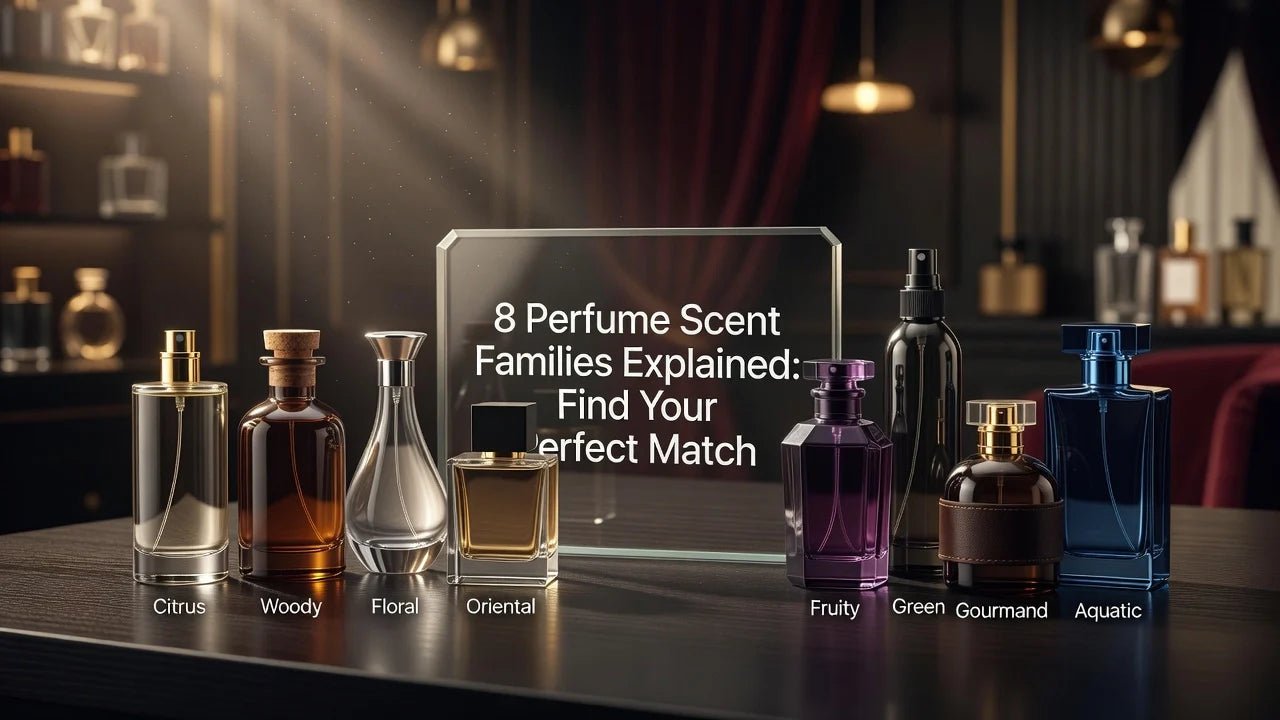
Have you ever walked into a perfume store, picked up a bottle that smelled absolutely amazing on someone else, and then spritzed it on your wrist only to think... wait, this smells completely different on me? You are definitely not alone in that experience.
Choosing a fragrance can feel overwhelming, especially when you are staring down hundreds of bottles with poetic names that give you zero clues about what is actually inside. The secret to finding your perfect scent comes down to understanding perfume scents and how they are organized into families. Think of these families like music genres. Once you know what you tend to enjoy, shopping for fragrance becomes so much easier and way more fun.
In this guide, we are breaking down 8 of the most common perfume scent families in plain, simple terms. No complicated jargon, no confusing industry lingo. Just a friendly walkthrough that will help you figure out exactly which fragrance category speaks to your personality and style. By the end, you will have a clear starting point for finding a perfume you will actually love wearing every day.
1. Floral: The World's Most Popular Perfume Scent Family
If you're brand new to perfume scents, floral is hands down the best place to start. It's the single largest fragrance category in the world, with the global floral perfume market valued at USD 15.2 billion in 2024 and growing fast. Florals dominate everything from high-end luxury counters to affordable everyday options, so you'll encounter them constantly. Forbes even named "Floral Fragrances Reinvented" one of the strongest perfume trends for 2025, which means this category is anything but outdated.
The Notes You'll See on the Bottle
When you flip a perfume box over and scan the ingredients, these are the floral notes worth knowing. Rose is classic and romantic, sitting somewhere between soft and powdery. Jasmine is richer and slightly exotic. Peony skews fresh and lightly fruity, making it a favourite for daytime wear. Lily of the valley is clean and dewy, almost like a spring morning. Tuberose and ylang ylang are the bold ones, heady and warm, adding depth and sensuality to a blend.
Soliflore vs. Floral Bouquet
Here's a quick distinction that will make you sound like you know your stuff. A soliflore centres on a single flower, think a pure rose or single jasmine, giving you one clear, focused scent story. A floral bouquet blends several blooms together for something more layered and complex. As a beginner, bouquets tend to feel more wearable because no single note dominates too strongly.
When to Wear Floral
Florals work beautifully for daytime wear, office environments, spring and summer outings, and romantic evenings. They're genuinely versatile, which is rare in fragrance.
Designer icons like Dior Miss Dior and Chanel Chance Eau Tendre sit in the £80 to £120 range. Aromaavenue's designer-inspired floral alternatives start from just £24.95 for 50ml, giving you the same olfactive experience without the eye-watering price tag.
2. Woody: Warm, Grounded, and Effortlessly Sophisticated
If floral is the friendly neighbour, woody is the quietly confident one you can't stop thinking about. This fragrance family is built around rich, earthy ingredients like sandalwood, cedarwood, vetiver, patchouli, and oud. Together, these notes create something that feels genuinely grounding on skin — warm without being heavy, bold without shouting. What makes woody scents so interesting is how they evolve throughout the day. They often open with something fresher, then slowly reveal a deeper, richer dry-down that honestly gets better as the hours pass.
The standout ingredient in this family right now is oud, also known as agarwood. It carries serious premium status in luxury perfumery, but it's increasingly crossing over into more accessible, designer-inspired alternatives, which makes it much easier to explore without spending a fortune. If you're curious about what the fuss is all about, this TikTok from a working perfumer breaks down oud beautifully.
Woody fragrances also tend to perform exceptionally well in Eau de Parfum concentration, projecting steadily for 6 to 8 hours and leaving that signature dry-down that clings to skin and fabric long after application. For best results, wear them in autumn and winter, to evening events, or in professional settings where you want to leave an impression without overwhelming a room.
One of the biggest reasons to explore this family is its unisex appeal. A full 40% of all new fragrance launches in 2024 were gender-neutral, and woody scents are driving much of that shift. Notes like cedar and vetiver sit beautifully on any skin, making this an ideal starting point if you want to move beyond traditionally gendered categories. For inspiration, this YouTube guide to woody autumn fragrances is a brilliant watch for beginners.
3. Oriental and Amber: Rich, Sensual, and Long-Lasting
If floral is the crowd-pleaser and woody is the strong, silent type, oriental (increasingly called amber in modern fragrance circles) is the dramatic one who steals the room. This family blends warm resins, vanilla, benzoin, incense, and spices like cardamom and cinnamon to create rich, enveloping scents that feel almost like wearing a warm embrace. The result is bold, sensual, and completely unforgettable.
One of the biggest reasons beginners fall hard for this family is the exceptional longevity. The dense, resinous base notes in oriental fragrances cling to skin and fabric beautifully, with many lasting anywhere from 8 to 12 hours on a single application. You'll also notice strong sillage, which is the scent trail you leave behind as you walk through a room. Few fragrance families announce your presence quite like this one. According to Scento's complete fragrance families guide, the amber family sits firmly alongside floral, woody, and fresh as one of the four core fragrance families.
As a beginner, it helps to know that oriental fragrances split into two broad camps. Soft orientals are lighter and more powdery, typically built around vanilla and warm musk. Spicy orientals go bolder, with pepper, clove, or incense taking centre stage. Knowing which direction you prefer makes narrowing down choices much easier.
Designer touchstones like Yves Saint Laurent Black Opium and Thierry Mugler Alien sit firmly in this family, but both carry price tags well above £90. If you love the profile, Aromaavenue's designer-inspired alternatives deliver that same warmth and intensity from just £29.95 for 100ml.
For occasions, this family shines in autumn and winter evenings, date nights, and special celebrations. The heaviness that makes oriental scents so captivating can feel a little overwhelming in summer heat or a small office, so save these for when they can truly shine.
4. Fresh and Citrus: Light, Clean, and Perfect for Everyday Wear
After the deep warmth of oriental scents, fresh and citrus fragrances feel like throwing open a window on a bright morning. This family is built around top notes of bergamot, lemon, grapefruit, neroli, and green accords, and the effect is immediate: clean, energising, and instantly likeable. Citrus notes have been described as "fresh, uplifting, and timeless" for good reason. They have anchored perfumery for centuries, and they remain one of the most universally flattering scent directions you can wear.
There is one thing every beginner should know before buying, though. Citrus top notes evaporate faster than any other fragrance component. A pure citrus scent can fade within 2 to 3 hours on skin, which is frustrating when you want a reliable all-day option. The good news is that the fix is simple once you know what to look for.
The trick is in the base notes. When you are shopping online, scan the full note breakdown and look for "citrus" or "bergamot" at the top paired with "musk," "cedarwood," or "vetiver" in the base. That combination keeps the fresh, bright character you want while extending wear time significantly. Marie Claire's editor-tested citrus perfume guide is a great reference if you want to see this structure in action across tested options.
For occasions, fresh scents are genuinely the safest social choice in any fragrance wardrobe. They shine at morning wear, gym-to-office transitions, summer days, and anywhere a heavier oriental or woody scent might feel too intense. They work on everyone, regardless of gender, making them a smart first purchase.
At Aroma Avenue, our fresh-family options carry the same clean, bright DNA as iconic designer bottles like Acqua di Gio and Davidoff Cool Water, starting from just £24.95 for 50ml. For students and professionals who want a go-to daily scent without spending £80 to £100 on a single bottle, that is a genuinely practical choice.
5. Gourmand: Sweet, Edible, and Surprisingly Addictive
If you've ever caught yourself drawn to someone wearing a scent that smells faintly of warm vanilla or caramel, you've already experienced the quiet power of gourmand fragrances. This family is built entirely around edible-smelling notes: vanilla, caramel, chocolate, coffee, tonka bean, and praline are the stars. The category was essentially invented when Thierry Mugler launched Angel in 1992, combining cotton candy, patchouli, and cocoa in a way that broke every perfume rule at the time. It worked spectacularly well, and gourmand has never looked back. Today, the category is massive, with research suggesting gourmand scents once accounted for 74% of the UK fragrance market, and the trend continues to accelerate with Gen Z leading the charge.
The secret to a great gourmand is balance. Sweet notes need an anchor, and skilled perfumers pair vanilla or praline with woody bases, musks, or resins to stop the fragrance tipping into dessert-counter territory. The result is something that smells indulgent but wears as genuinely sophisticated. One important tip for beginners: less is more here. One or two sprays is genuinely enough, because these notes project well and can become overwhelming if over-applied.
Longevity is one of gourmand's biggest strengths. Vanilla and tonka bean are some of the most tenacious base notes in perfumery, clinging to skin and fabric for hours after application. For occasions, think autumn evenings, date nights, and cosy social settings. Be cautious in hot weather though, because warmth amplifies sweetness significantly on skin, which can quickly cross the line from inviting to overpowering. Want to learn more about what makes gourmand fragrances trend? This family is arguably the one most likely to earn you compliments, making it a brilliant starting point for anyone wanting their scent to leave a real impression.
6. Aquatic and Marine: Fresh Ocean Air in a Bottle
Here's where perfumery gets genuinely fascinating. Unlike every other fragrance family, aquatics are built almost entirely from molecules that don't exist in nature. Water has no smell, and neither does open ocean air. So perfumers engineered one. The key ingredient is Calone, a synthetic molecule that delivers an ozonic, sea-breeze quality with a faint hint of watermelon. Paired with ambroxan (warm, woody, and slightly salty) and supporting notes like bergamot, white musk, and water lily, Calone creates a convincing illusion of standing at the shoreline. The genre was effectively launched into mainstream consciousness by Issey Miyake's L'Eau d'Issey in 1992, and the fragrance world hasn't looked back since.
The family has strong masculine roots. Think of iconic blue bottles and fresh sporty advertising. But modern aquatics have shifted considerably, with a growing number of unisex aquatic releases appealing to younger shoppers who associate this family with cleanliness, freedom, and effortless cool. Vogue has called the best aquatic fragrances a getaway in a bottle, which sums up the emotional appeal perfectly.
Performance-wise, aquatics are light-to-moderate. Expect around 3 to 5 hours of wear, which is shorter than oriental or woody scents but entirely appropriate for the context. These are not statement fragrances; they are everyday companions. They work brilliantly at the gym, during a summer commute, or in a shared office where a heavier scent might overwhelm colleagues.
One genuinely useful beginner tip: apply your aquatic over an unscented moisturiser. Hydrated skin holds fragrance longer, so you extend the wear without piling on extra sprays. It's a simple trick that makes a noticeable difference.
Best occasions: spring and summer days, active wear, and any warm-weather office setting. If you're nervous about choosing a scent that might divide opinion, aquatics are your safest bet. Aquatic fragrances are back in a big way for 2025, and the range available at every price point makes this the perfect family for first-time buyers to explore.
7. Aromatic and Fougere: The Classic Backbone of Men's Fragrance
Think of aromatics as the fragrance world's equivalent of a perfectly pressed shirt. Clean, structured, and instantly credible. This family is built around herbal and green notes, including lavender, rosemary, sage, basil, and thyme, typically layered over woody or mossy bases to create a profile that feels organised and confidently grounded.
Fougère (pronounced "foo-jair") is the most important sub-category here, and understanding it unlocks a huge chunk of men's fragrance history. The name is French for "fern," though ferns have no real scent. Instead, the accord evokes cool, green forest undergrowth. The classic fougère formula rests on three pillars: lavender at the heart, coumarin (a sweet, hay-like synthetic derived from tonka beans) in the base, and oakmoss for earthy depth. This combination underpins hundreds of beloved men's fragrances, from Drakkar Noir to the cleaner, modern interpretations you'll find across designer counters today. If you want to explore this family further, Wikiparfum's guide to the aromatic fougère family is a genuinely excellent deep dive.
The good news for anyone exploring perfume scents for the first time: the aromatic family is widely considered one of the most beginner-friendly categories for workplace and professional settings. Lavender in particular registers as calm, clean, and non-intrusive, making it a smart first choice if you're building a fragrance wardrobe for office life. It's noticeable without being bold, which is exactly what you want when you're sitting two desks away from someone.
Traditionally positioned as masculine, the aromatic family is increasingly being reclaimed across all genders. Modern interpretations soften the herbal intensity with floral accords or touches of gourmand sweetness, making them feel far more fluid than their 1980s barbershop origins might suggest.
Best occasions: morning wear, daily office use, and casual smart outings during spring and summer. This family delivers effortless, put-together energy without requiring much thought, which is exactly what a reliable signature scent should do.
8. Chypre: The Most Sophisticated Scent Family You Have Never Heard Of
Chypre (pronounced sheep-ruh, though you may also hear shee-pruh) is arguably the most fascinating fragrance family you will ever encounter, and almost certainly the least known outside serious perfume circles. The word translates from French as "Cyprus," the Mediterranean island historically famed for its rich, resinous scents. Its modern form was established in 1917 when perfumer François Coty launched Chypre de Coty, setting the architectural blueprint that still defines the family today. That blueprint rests on three pillars: bergamot at the top for citrusy brightness, labdanum resin in the heart for warm, honeyed depth, and oakmoss at the base for that unmistakable earthy, forest-floor quality. As Alpha Aromatics describes it, chypre is "perhaps the most beautiful and complex of all fragrance families," built on a tension between light and dark, sweet and bitter, fresh and deeply rooted.
This is the family most associated with prestige in fragrance circles. Benchmark chypres include Guerlain Mitsouko and the vintage formulation of Miss Dior, perfumes regularly described as among the greatest compositions ever created. Modern chypres have evolved considerably, with fruity chypres adding peach or cassis for a softer entry point, and floral chypres layering in rose or iris for a more romantic feel, making the family far more approachable than its classic incarnations.
Beginners often find chypres a little challenging at first. The dryness and complexity can feel unfamiliar compared to something sweeter or fresher. But as CaFleureBon's exploration of chypre's timeless elegance notes, that complexity is precisely the point. Once it clicks, you will not want anything else, and those around you will absolutely notice. Chypre is the scent family that makes you smell like someone who genuinely knows perfume.
These fragrances shine in cooler months, formal settings, and evening occasions, anywhere you want to project quiet confidence and leave a lasting impression without saying a word.
How to Find Your Perfume Scent Family Without Setting Foot in a Shop
Now that you know all eight major fragrance families, the next step is figuring out which one actually belongs on your wrist. Here are five practical ways to do it from home.
1. Start with what you already love
Think about two or three scents you have genuinely enjoyed wearing or being around, whether that is a citrus shower gel, a vanilla candle, or an old bottle of body spray. Look up those products and identify the fragrance family they fall into. If your go-to shower gel lists bergamot and grapefruit, you are already a Fresh or Citrus person without realising it. This reverse-engineering approach is faster and more accurate than any online quiz because it is based on your actual preferences rather than abstract questions.
2. Read the notes pyramid, not the marketing copy
Perfume descriptions love words like "mysterious," "sensual," or "effortlessly fresh," which tell you almost nothing useful. Instead, look at the notes list. Top notes are what you smell in the first 15 minutes, heart notes form the core character of the fragrance, and base notes are what linger on your skin after four or more hours. A perfume described as "mysterious" might list vetiver, leather, and smoke at its base, which tells you it sits firmly in the woody or chypre family and saves you from a very expensive surprise.
3. Use season and occasion as your first filter
Before exploring individual scents, narrow your shortlist by context. For summer daytime wear, Fresh, Citrus, and Aquatic families are almost always the right starting point. For autumn evenings or formal occasions, Oriental, Woody, and Gourmand families will serve you far better. Using season and occasion as your first filter cuts eight families down to two or three immediately, which makes the whole process far less overwhelming.
4. Avoid the blind-buy trap
Spending £80 to £200 on a full designer bottle you have never smelled is genuinely the most expensive way to discover fragrance. Your nose deserves a trial run before that kind of commitment. Designer-inspired alternatives from Aromaavenue start from just £24.95 for 50ml, meaning you can explore multiple scent families across different seasons and occasions without the financial risk. If a particular family does not suit you, you have lost very little and learned a great deal.
5. Remember that skin chemistry is personal
The same fragrance can smell completely different on two people because your skin's pH, temperature, and natural oils all interact with the formula. This is why reading online reviews alone is unreliable; a scent that smells gorgeous on one reviewer might go powdery or sharp on you. The practical takeaway is simple: apply to your wrist, wait at least 30 minutes, and then re-evaluate before making any judgement. Accessible pricing makes this testing process genuinely low-stakes, which is exactly how fragrance discovery should feel.
What Designer Perfume Scents Actually Cost (And the Smarter Alternative)
Let's talk about what premium perfume scents actually cost, because the numbers are pretty eye-opening.
The luxury perfume market was valued at $35.64 billion in 2024 and is growing steadily. But here's the thing: that growth isn't trickling down to everyday shoppers. Designer houses are holding firm on pricing, and UK buyers are feeling it. Flagship 100ml bottles now regularly sit between £80 and £160 on the shelves, and that's for a single scent from a single fragrance family.
To make that concrete, Chanel No.5 EDP 100ml retails at roughly £115 to £130 in the UK. Dior Sauvage EDP 100ml sits at around £90 to £110. YSL Black Opium lands at approximately £85 to £100. Each of those bottles covers just one fragrance family. If you want a proper scent wardrobe covering floral, woody, oriental, fresh, and beyond? You're looking at several hundred pounds before you even start.
That's exactly where a smarter approach comes in. Fragrance market data consistently shows consumers are actively seeking accessible alternatives to luxury pricing, and that shift is accelerating. The global perfume market is projected to grow from USD 64.1 billion in 2026 to USD 85.5 billion by 2035, driven partly by shoppers who want quality without the brand tax.
Aromaavenue's designer-inspired 100ml EDPs start from just £29.95, which means a saving of £60 to £100 per bottle compared to designer equivalents. Put simply, you could build a complete scent wardrobe covering every fragrance family you've just discovered in this guide, for roughly the same price as one designer bottle.
Crucially, you're not trading down on performance. Aromaavenue formulates in Eau de Parfum concentration, the same tier that is outpacing Eau de Toilette in global market share precisely because consumers are demanding longer wear and better sillage. The quality gap is closed before you even open the box.
Your Next Step: Choosing a Perfume Scent That Actually Works for You
You've covered a lot of ground in this guide, so here's the quick version to take with you. Floral is romantic and versatile, woody is warm and grounded, oriental is rich and long-lasting, fresh/citrus is clean and perfect for daily wear, gourmand is sweet and compliment-winning, aquatic is light and universally wearable, aromatic is herbal and professionally polished, and chypre is complex and sophisticated.
When you're ready to choose, remember the simple framework: pick your season and occasion first, and you'll narrow eight families down to two or three almost instantly. Then check the notes pyramid to confirm the fit.
The best part? You don't need a department store, a fragrance expert, or a £100+ budget to get this right. You just need a starting point.
That's exactly what Aromaavenue is here for. Browse the full range by scent family, find your fit, and build a real fragrance wardrobe with designer-inspired, long-lasting EDPs starting from just £24.95. Low risk, high reward, and genuinely great scent.
Conclusion
Finding your perfect fragrance does not have to feel like guesswork anymore. Now that you understand the 8 major scent families, you have a real framework for making confident choices. You know that scent families work like categories that reflect personality and mood, that fragrance reacts differently on every individual skin type, and that knowing your preferred family saves you time and money when shopping.
The next step is simple: head to a store or order some samples and test one fragrance from each family that caught your attention. Pay attention to how each one develops on your skin over a few hours.
Your perfect scent is already out there waiting. Armed with this knowledge, you are no longer browsing blindly. You are shopping with intention, and that makes all the difference. Go find the fragrance that feels unmistakably, beautifully like you.




Leave a comment
This site is protected by hCaptcha and the hCaptcha Privacy Policy and Terms of Service apply.