


Your first perfume should not be a personality quiz result or a TikTok impulse buy. If you are a student who has never owned a real fragrance, the goal is not to build a shelf of bottles. It is to find one affordable perfume that fits the week you actually live: halls, seminars, part-time shifts, quiet library sessions, and the occasional night out. The internet may want you to own twelve perfumes, but you only need one that feels like you and still works next year.
This guide gives you a simple way to choose it. You will audit your real week, turn that routine into a scent family, filter for what students actually need, and test before you commit. We will also look at what to check before buying and whether a 50ml or 100ml bottle makes more sense. By the end, you will know how to pick one bottle you will actually wear, not just admire on a shelf.
Why Buying a Perfume and Choosing One Are Two Different Things
Buying a perfume is a transaction. Choosing one is a decision about how you want to smell for the next year. Most students do the first and call it the second, then wonder why the bottle sits half-used on a shelf by March.
Here is the context. Fragrance was 2024's fastest-growing beauty category, outpacing every other segment despite being the smallest by size, according to the most recent State of Fashion: Beauty report (McKinsey and BoF, June 2025). That is global and largely US data, not a description of UK student life, so treat it as direction rather than gospel. The wider beauty market has been slowing; fragrance has been the bright spot, and younger shoppers are driving much of it.
The promise of this article is deliberately narrow. One bottle, chosen against your real week (halls, seminars, shifts, nights out), that you will still wear next year. No collection, no twelve-bottle shelf.
There is money logic here too. An affordable perfume only stays affordable if you actually finish it. That is the value-per-wear thinking running through every step below, and it is the same principle behind how we make luxury affordable. Here is why choosing one is harder than it sounds.
The Internet Wants You to Own Twelve Perfumes. You Need One
PerfumeTok has a business model, and it isn't "one bottle." Younger shoppers are being pushed to build collections, chase trends and layer multiple fragrances rather than commit to a single signature scent (WSL Strategic Retail). That's rational for the platforms and the brands, because every trend is another sale. It's expensive for you, because every trend purchase is a sunk cost you can't reclaim.
The next push is already scheduled: heading into 2026, gourmand, vanilla and Arabian-inspired perfumes are forecast among the fastest-growing trends, with pistachio, caramel, honey and matcha the highest-growth notes (Spate). Read that as a forecast of attention, not as evidence of what UK students actually wear.
Here's the pivot. Trend-chasing and collection-building are the exact opposite discipline to choosing a signature scent. The market is structurally working against you, at both ends of the funnel: creator reviews and comparisons on TikTok drive discovery, Google captures purchase intent, and brands running both grow fastest, per Spate. That machine sells shelves. A multi-bottle set only makes sense once you already know what you love, which is why Create Your Perfect Bundle is a later decision, not a first one.
Your goal is narrower, and cheaper: one bottle you can describe from memory.
Step 1: Audit Your Real Week, Not the Week You Wish You Had
Start with a blank note, or the notes app, and write down where you actually are across a normal week, and who is within arm's reach while you're there. A signature scent gets chosen against proximity, not against a mood board.
The Four Places You're Actually Standing
Halls and shared kitchens. Close quarters, so keep it quiet. Anything that fills a room will also fill your flatmate's room.
Seminars and lectures. Long, warm rooms with low projection, meaning the scent doesn't travel far from you.
Part-time work. Every workplace has its own unspoken scent rules, and customer-facing shifts are the strictest of all.
Nights out. Loud, packed rooms where the opposite applies: here a scent needs to carry.
One bottle has to survive all four. Pick for Saturday night and you won't wear it on a Tuesday, which is why the fantasy-week version of this exercise always fails.
Run the Frequency Test
Tally roughly how many hours a week you spend in each context. Longevity, how long a scent lasts once it's on your skin, matters most in the place you spend the most hours, so that context should get the strongest vote in your decision.
Count it the way researchers do a time diary, recording what you genuinely did rather than what you meant to do. Two honest days will do. The tally tells you which scent family to look for next.
For clarity on how we label and describe the fragrances referenced throughout this piece, see our guidance on identification and reference purposes.
Step 2: Turn Your Week Into a Scent Family
Now turn that audit into a category, not a brand name. Scent families are broad shorthand: fresh and citrus (clean, sharp, lemon peel and cut grass), floral (rose, jasmine, peony), woody (cedar, sandalwood, dry and grounded), gourmand and sweet (vanilla, caramel, edible), and oriental or amber (warm spice, resin, heavier). Seeing them side by side in our new arrivals makes the difference obvious.
The mapping is simple. If most of your hours sit in halls and daytime seminars, fresh, citrus or light floral stay polite at close range. If your week leans evenings and cold weather, gourmand, vanilla and amber come alive.
Concentration matters too. Eau de toilette carries less perfume oil; eau de parfum carries more, so you need fewer sprays and it lasts longer. For a student week, the stronger one is usually the better buy.
One warning. Gourmand and vanilla are forecast to lead into 2026, which is exactly why you should test whether you actually like smelling of caramel before buying into it. Trends sell bottles; your nose has to wear them.
So pick one family. Not three. Layering is a legitimate hobby and a bad first purchase, because it multiplies the number of bottles you need before you know what you like at all.
Step 3: Filter for What Students Actually Need: Longevity First
Your priority order is fixed: longevity first, how much you actually like it second, price third. A cheap perfume you respray four times a day is not cheap. It is a subscription.
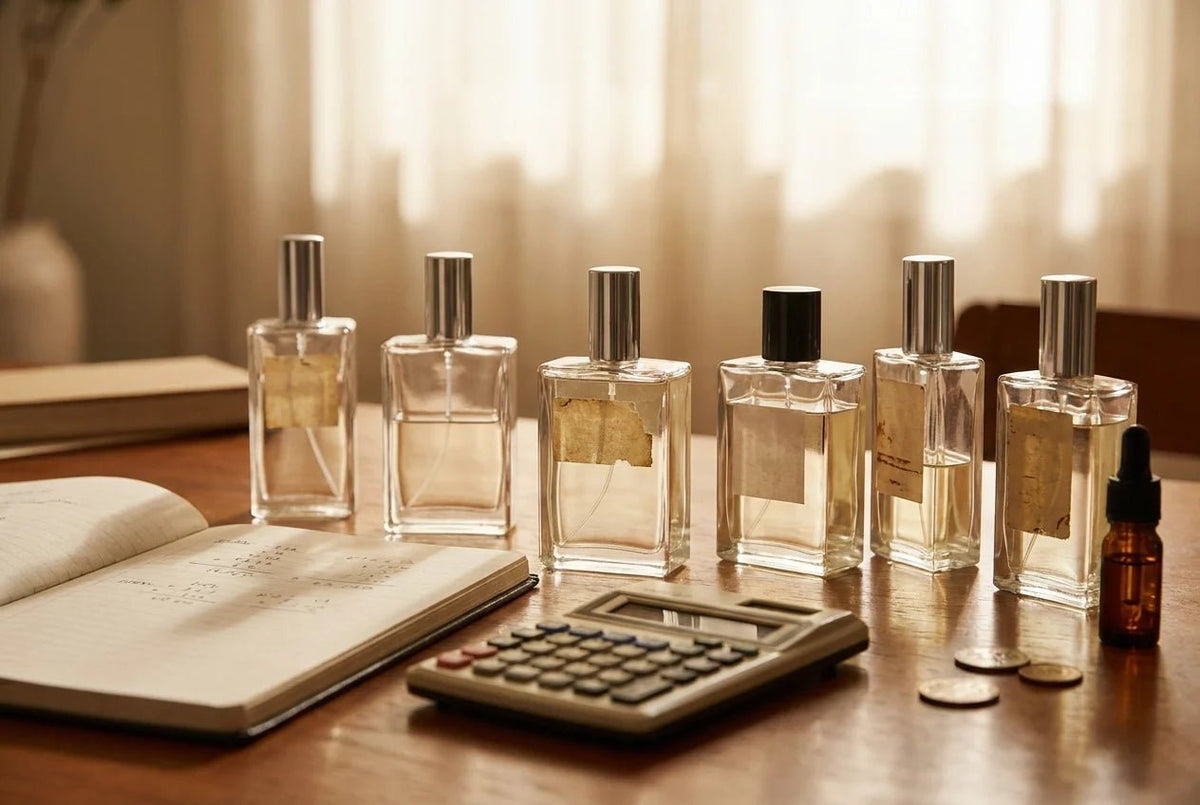
Then do the maths. A £24.95 50ml bottle worn three days a week is roughly 156 wears a year, so about 16p a wear. That is the only price comparison that matters, and it is why a slightly dearer bottle you finish beats a bargain you abandon. Our fragrance buying guides dig into this further.
Staying power matters because of your timetable, not your taste. You cannot top up between a seminar and a shift, and reapplying over a shared bathroom sink is not a plan. When you search for a long-lasting affordable perfume, you are really asking for something still there at 9pm.
Test before you commit. Spray on skin, never paper, and check how it reads four hours later. Does it settle into something you still like, or disappear entirely? If it fades to nothing, keep looking.
Designer-inspired fragrances exist to close the gap between the scent you want and the price you can pay. It is a legitimate category, not a compromise.
Step 4: The Three-Wear Test Before You Commit
Here's the rule: never buy a bottle on one spray in a shop or one good review. Take the same tester home and wear it on three genuinely different days.
Day one is an ordinary teaching day: seminars, library, halls. Day two is a shift or work day. Day three is an evening out. Each mirrors a context from your Step 1 audit, so you are testing the scent against your actual week.
On each wear, listen for three things. Does it still smell like itself after four hours, or has it collapsed into generic sweetness? Does anyone comment, and is it the comment you wanted? Can you still notice it, or has it gone invisible? Your nose goes blind to your own perfume within about 20 minutes, so ask a flatmate rather than trusting your own nose at hour five.
Then the honesty check. If by the third wear you are wishing you had worn something else, that is your answer. You just saved the price of the bottle.
Three wears is slow by PerfumeTok standards. Good. Slow is what builds a signature instead of a shelf.
If it passes, ordering is the quick part: our delivery timeframes are measured in days, not weeks.
What to Check Before You Commit
Three wears in, you should be nearly decided. Run this checklist before the money leaves your account.
Size. How many millilitres are you actually buying? Check the cost per ml rather than the sticker price: 50ml and 100ml often differ sharply, and the bigger bottle is not automatically the better buy if you are still testing. Match the size to your value-per-wear maths from Step 3.
Longevity claim. Does the brand state a concentration, eau de toilette or eau de parfum? More importantly, did you test it on skin past the four-hour mark? If it disappeared by lunchtime on your shift day, it fails.
Cost per wear. Divide the price by the days you expect to wear it. If two bottles are neck and neck on scent, this one number decides it.
Returns and sampling. Can you try before committing? Ordering online is the safer route, because distance purchases carry a 14-day cancellation right that in-store buys do not. Ask about testers or samples first.
The cheapest perfume in the world is the one you never wear.
The Bottle Worth Committing To: 50ml or 100ml
Everything on that checklist points to a single moment: the bottle you actually buy. This is where all four steps land. If your real-week audit, your scent family, your longevity filter and your three-wear test all point the same way, you have your answer, and it should be one bottle, not a shelf.
Aromaavenue is built for exactly this decision. The brand sells long-lasting, designer-inspired perfumes created to smell like the luxury originals, with 50ml from £24.95 and 100ml from £29.95.
Which size is actually right for you
Start with 50ml at £24.95 if this is your first proper perfume. It is enough to carry you through a year of regular wear, so you can finish it, learn how it behaves in every context from your audit, and still be testing rather than locked in. You are not putting a larger outlay behind a scent you have only known for three wears.
Choose 100ml from £29.95 only when those three wears have already told you this is the one. The upfront cost is higher, but the cost per wear drops, and that trade is only correct once the decision is settled rather than still open.
That is the whole argument of this piece in one purchase. Long-lasting designer-inspired perfume at a student price gives you the luxury scent experience without the luxury price, which is precisely the problem a first signature scent sets out to solve.
Ready to commit? Browse the 50ml and 100ml bottles and pick your size.
One Bottle, Worn for a Year
The fragrance market is built to sell you many cheap bottles. A signature scent is built the opposite way: you buy one, wear it often, and let it become yours. That is the whole argument, and it is why this piece ends with a single recommendation rather than a list.
If you need the process in one glance: audit your real week; map it to one scent family; filter on longevity and value-per-wear; then pass the three-wear test before you spend anything.
Now the instruction. Choose your size, buy one bottle, and wear it for a year. Don't judge it in a fortnight. Reappraise only after a full winter and a full summer, because a scent reads differently in cold air and warm skin, and only a year of both tells you the truth.
Keep the money logic close: cost per wear, not sticker price, is what keeps a first proper perfume genuinely affordable. One bottle you finish will always beat five forgotten ones in a drawer.
So begin low-risk: a 50ml at £24.95 covers a year of regular wear without tying up much of your loan. If you ever want a second scent later, you can create your perfect bundle then. This year, though, you're a one-bottle person.
Conclusion
Choosing your first signature scent is not about building a collection. It is about wearing one bottle until it becomes yours. Audit your real week, translate it into a scent family, and filter for longevity and value per wear. Pass the three-wear test, then buy the size that matches your budget and habits. A 50ml bottle at £24.95 keeps the risk low while still covering a year of regular wear. The reward is simple: fewer forgotten bottles, more confidence, and a scent people begin to recognize as you. Ready to make it real? Browse the 50ml and 100ml bottles, choose your size, and commit to one bottle for a year. Your signature scent starts not with twelve options, but with one good decision.



Leave a comment
This site is protected by hCaptcha and the hCaptcha Privacy Policy and Terms of Service apply.