

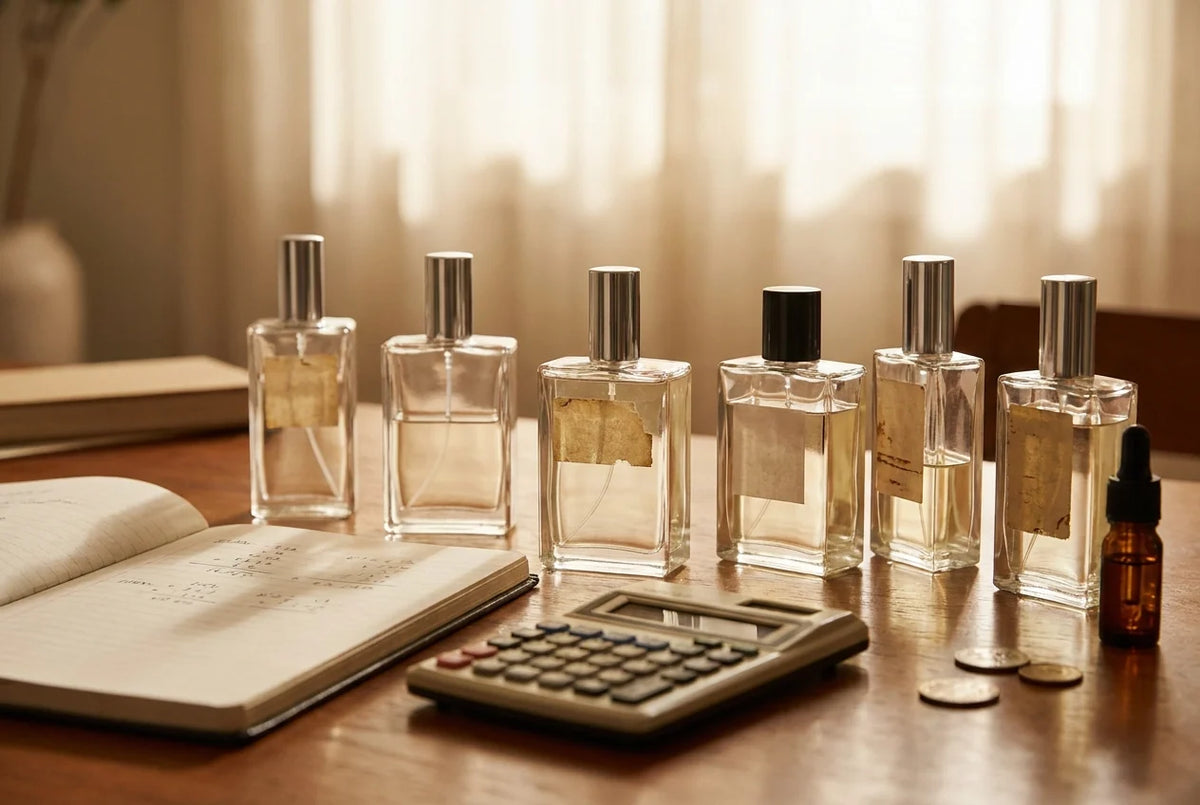
Imagine two bottles on a shelf. One costs £30. The other was £70 and is now 50% off, so it feels like a steal. Most of us grab the discount. But what if the £30 bottle is actually the smarter buy? That is where cost per wear comes in. Instead of asking "how cheap is this bottle?", you ask "how much does each time I wear it really cost me?" This simple maths can change how you shop for the best affordable perfume, because the sticker price tells you almost nothing on its own.
In this tutorial, we will walk through why discount stickers can mislead, what cost per wear actually measures, and the formula: price divided by wears. We will adjust for concentration, longevity, sprays per day, and how often a scent suits your life. Then we will compare a £30 bottle with a discounted £70 one, use a table to make the maths obvious, and see when the cheap bottle genuinely wins. By the end, you will know where affordable perfume fits the maths, get FAQ answers, and run the numbers before you reach the till.
Why the Discount Sticker Tells You Almost Nothing
Next time you open a perfume page, notice what your eyes find first. The 30% off badge, not how many times you will actually wear the bottle.
Sticker price is an acquisition cost. It tells you what you hand over today, not what each wear costs you. Value appears only when you divide price by uses.
Clothing already proved this. A €20 shirt worn 50 times a year and replaced after a year costs €0.40 a wear. A €50 shirt lasting four years costs €0.25 (FashionUnited). The pricier one is cheaper per use. That is the perfume aisle exactly: a discounted bottle worn twice a month loses to a full-price bottle you reach for daily.
Honest caveat: no published source applies cost per wear to fragrance, so this is a deliberate transfer of a proven method from clothing.
The payoff? One repeatable calculation and a comparison table, so you judge value yourself, which is how we make luxury affordable.
What Cost Per Wear Actually Measures
Cost per wear is simply price divided by uses. A £30 bottle worn 100 times is 30p a wear; worn 10 times, £3. It is a frequency-based value measure, so it rewards the bottle you reach for daily and punishes the one sitting on the shelf looking expensive.
This isn't a hunch. Eckmann and Reisch, in Psychology and Marketing (vol. 43, article 2), ran six preregistered experiments (two incentive-compatible) and found that communicating cost per wear shifted preference from cheap, low-quality options toward pricier, higher-quality ones. Money framing also beat sustainability framing, because shoppers respond to personal benefit and are wary of greenwashing. Lead with the wallet.
One caveat: that evidence is all apparel. For perfume, a wear is one application or one day, governed by concentration and longevity rather than fabric durability.
Three things weaken it: no easy comparison, a special occasion purchase, or a durable option that still costs more per wear. Keep those in mind.
The Formula: Price Divided by Wears
Cost per wear = bottle price ÷ wears per bottle. Screenshot that line.
Then build the denominator: millilitres ÷ millilitres per application = applications per bottle. Check that figure against how many sprays you actually use a day, because your habit, not the label, sets it.
Worked anchor: a 100ml bottle at £29.95, used in roughly 2ml applications, gives about 50 wears. That's around 60p a wear.
Now the prestige bottle discounted from £70 to £49, worn 20 times a year. Even after the discount, it lands at about £2.45 a wear.
Same arithmetic you'd run on jeans, trainers or a coat, just with smaller numbers top and bottom.
One warning: the formula is only as honest as the two numbers you feed it. The next three adjustments fix exactly that.
Adjustment 1: Concentration Sets How Many Wears You Get
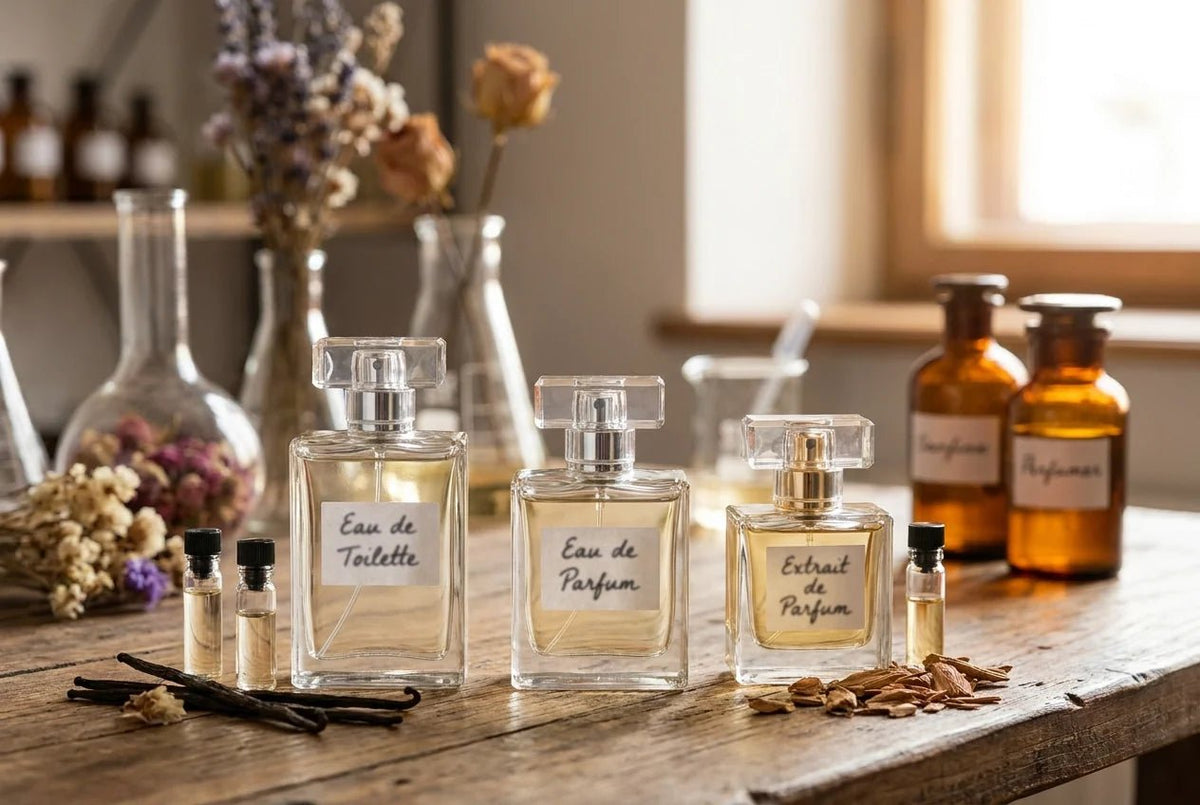
Concentration is the first input you can actually verify. EDT is lighter, with more alcohol and shorter wear. EDP is the everyday standard, with a richer oil load. Parfum or extrait carries the highest concentration and the longest wear.
The mechanism is simple. More oil means fewer millilitres per application and more hours per wear, so the same 100ml stretches into more wears. A light EDT often needs a midday top-up; an EDP of the same size usually does not. That can halve or double your denominator.
Concentration is printed on every product page, which makes it a durability signal you can check rather than a claim you take on trust.
Aromaavenue's designer-inspired 50ml and 100ml bottles are formulated for long wear, and that is precisely the property that pushes your per-wear figure down.
So check concentration before you check price. Concentration moves the denominator; a discount only nudges the numerator.
Adjustment 2: Longevity and Sprays Per Day
Concentration sets the base, but longevity decides the real denominator. Longevity is simply hours of wear per application. Nothing on a product page or shelf tells you that, which is why most shoppers never check it. Run the maths: an eight-hour scent worn daily needs one application. A three-hour scent needs two, doubling its cost per wear overnight. Test a sample or strip across a full day and log when it fades. Your skin beats marketing copy. Sprays per application matter just as much. A hand-measured test found about 735 sprays in a 50ml bottle, so two sprays versus five changes wears per bottle dramatically at the same price. An affordable bottle with genuine longevity beats a prestige one that vanishes by lunch. That is where affordable perfume brands quietly win. Order samples first and check delivery timeframes. If the scent disappoints, return eligibility covers you.
Adjustment 3: How Often the Scent Suits Your Life
Longevity sets how long one wear lasts. This last adjustment sets how many you'll get, and wear frequency is the biggest variable in the whole sum. It's entirely personal, so no brand can hand it to you.
Everyday and occasion wear behave differently. The cost per wear effect weakens when a purchase is tied to a special occasion, because low frequency is baked in from the start.
Count your real occasions before buying: office days, gym sessions, weekends, evenings out, and the seasons the scent works in. A versatile fresh scent worn 200 times a year beats an intense evening scent worn 12 times, even at identical prices.
That's why one or two flexible bottles usually beat five specialists. Higher average wear counts drag down the cost per wear of everything you own. For men after the best affordable perfume, the winner fits the most days of the week, not the boldest shelf pick. Create Your Perfect Bundle if a few versatile bottles suit you better.
Worked Example: The £30 Bottle vs the Discounted £70 Bottle
So you've counted your wears. Now let's put that number to work. Bottle A costs £29.95 for 100ml, matching Aromaavenue's 100ml tier. Bottle B is a prestige scent listed at £70, discounted to £49.
Wear A five days a week for a year: 260 wears, about 12p each. Wear B twice a month: 24 wears, £2.04 each even after the discount. The shelf hides this: the discounted bottle is roughly seventeen times more expensive per use.
Run the reverse case. If B is the one you genuinely reach for daily, its cost per wear falls to about 19p and it wins. That's the mechanism. A discount badge changes the numerator by a few pounds. Wear frequency changes the denominator by an order of magnitude.
The Comparison Table That Makes the Maths Obvious
One comparison proves a point; a table proves it for every bottle on your shortlist. The study's first moderator is blunt: the cost per wear effect weakens when shoppers cannot compare. So compare.
Columns: bottle, size, price, concentration, sprays per day, wears per year, cost per wear.
Bottle |
Size |
Price |
Concentration |
Sprays/day |
Wears/year |
Cost per wear |
|---|---|---|---|---|---|---|
Designer-inspired |
100ml |
£29.95 |
EDP |
2 |
260 |
12p |
Mid-range EDT |
100ml |
£28 |
EDT |
4 |
120 |
23p |
Prestige (discounted) |
50ml |
£49 |
Parfum |
2 |
24 |
£2.04 |
Build the same table in a notes app before buying. Pull concentration from the product page and estimate wears from your own weekly routine. Three or four candidates take about two minutes, and the comparison routinely flips which bottle gets bought. That is the whole point.
Enthusiasts: sharpen three inputs, sprays per ml, projection, and seasonal wear frequency.
When the Cheap Bottle Genuinely Wins
Your table has one job left: telling you when to overrule it.
If the pricier bottle still costs more per wear, the cheap one is the rational buy, and no amount of framing changes that. A £9.95 body mist worn daily costs pennies a wear, while a £29.95 bottle worn four times a year works out around £7.49 a wear. Not close.
One-off occasions follow the same logic. When you buy for a wedding or a gift, low wear frequency is baked in, so buy the cheapest bottle that does the job properly.
Then there's the other trap: the pleasant but not-quite-you bargain, worn three times and left holding the worst cost per wear in the drawer.
Cost per wear is a tool, not a rule. Showing you where it fails is what makes it trustworthy where it works. The aim was never to spend more. It was to spend on the bottle you'll actually use.
Where Affordable Perfume Fits the Maths
This is where the maths gets interesting for anyone comparing affordable perfume brands. The lowest cost per wear tends to sit with bottles that are cheap to buy and long-wearing, not the ones carrying the biggest discount badge.
Low price plus a high wear count is the combination designer-inspired houses are built around. It attacks both halves of the fraction at once: the numerator stays small while the denominator grows.
Aromaavenue is one option among several: 50ml from £24.95, 100ml from £29.95, made to smell like luxury brands and formulated for long wear. The 100ml tier is usually the better per-wear buy, since a marginally higher price roughly doubles the wears in the denominator.
Check concentration and longevity claims on any product page before comparing. Those two inputs shift the denominator more than a promotional price shifts the numerator.
So put three or four affordable perfume brands into the table and let the arithmetic pick the winner. Current Aromaavenue discounts give you a starting figure.
Frequently Asked Questions
Is expensive perfume better value? Only if it lasts longer and gets worn more often. A prestige bottle sitting untouched while a cheap one is worn weekly loses every time.
What is the best affordable perfume for men? The one with the highest wear count, which for most men means a versatile everyday EDP, not a specialist evening scent. Our men's designer-inspired range is built for it.
How many wears from 100ml? Roughly 50 to 100, depending on concentration and sprays per application, so 30p to 60p a wear.
Do discounts change the answer? Barely. A 30% saving shifts the numerator by pounds; wear frequency shifts the denominator by an order of magnitude.
How do I check longevity? Test a sample across a full day, log when it fades, then use that number in the denominator.
Run the Maths Before You Reach the Till
So here's the whole method in one line: bottle price divided by wears, adjusted for concentration, longevity and how often the scent suits your life.
The headline still stands. That discount sticker tells you almost nothing about value, and a £30 bottle can beat a discounted £70 one by a wide margin.
Take three things into your next purchase:
Estimate your wears before you look at the price.
Build a short comparison table.
Check concentration before you check the discount badge.
Be honest about frequency, too. For a one-off occasion buy, low wear count is built in, so don't force the maths onto a purchase it doesn't fit.
Aromaavenue's 50ml from £24.95 and 100ml from £29.95 are built for long wear, which is exactly the property that drives cost per wear down. Log your bottles and wear counts in your Aromaavenue account so the figures stay honest.
So stop chasing percentage-off badges. Start asking how many times you'll actually wear it.
Conclusion
Cost per wear turns perfume buying into a practical decision. The price on the bottle matters far less than how many times you will actually wear it. Concentration, longevity, sprays per day, and how often a scent fits your life all shape the real maths. A cheap bottle can win, but only when the wear count supports it. So estimate your wears first, build a simple comparison table, and check concentration before you check the discount badge. Then run the numbers before you reach the till. Log your bottles and wear counts in your Aromaavenue account, and let every future purchase be guided by value, not hype. Your best scent is the one you reach for again and again.


Leave a comment
This site is protected by hCaptcha and the hCaptcha Privacy Policy and Terms of Service apply.