

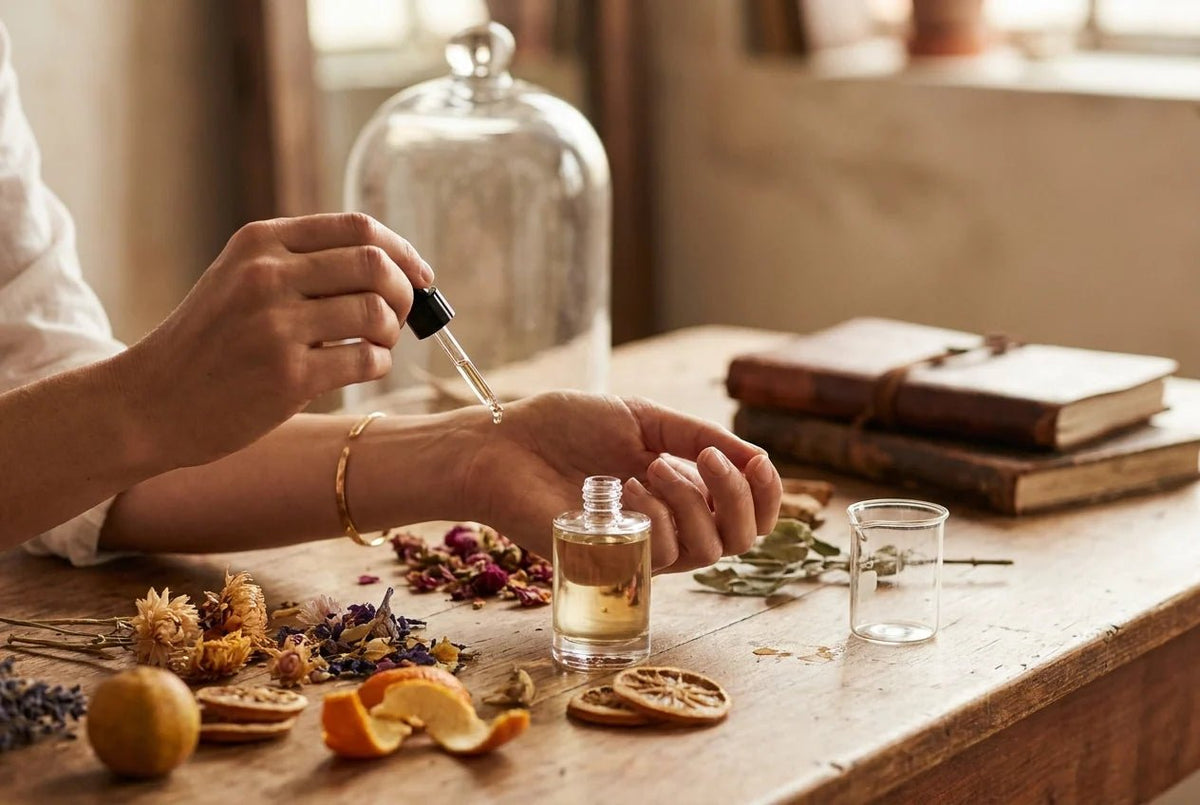
You spritzed the same luxury perfume fragrance on a friend, watched it bloom into something magnetic, then tried it on yourself and got a completely different story. Maybe it vanished in an hour. Maybe it turned sharp, soapy, or flat. This is not a flaw in the bottle. It is chemistry, and it is more predictable than most shoppers realize.
A scent is a collaboration between the formula and the wearer. Skin pH, sebum levels, dryness, body heat, and molecular weight all shape how notes unfold. Concentration matters too, because Eau de Parfum and Parfum do not behave the same way on every person. Then come the variables you can control: diet, hydration, moisturising, and layering. Just as important are the ones you cannot: hormones, medication, weather, and genetics.
This analysis will guide beginners through each of these forces, from pulse point testing and decants to choosing luxury scents that work with your skin. By the end, you will understand why the same fragrance can smell and wear so differently from one person to the next, and how to make your next blind buy far more predictable.
A Scent Is a Collaboration Between the Formula and You
The same bottle can read as two different fragrances on two people. On one wrist it opens warm and unmistakable. On another it turns sharp, flat, or disappears inside an hour. The wearer is not a bystander in that outcome; they are half of it.
Longevity is not a fixed property of a fragrance. It is an interaction between the formula and your skin pH, oil level and temperature. Recent peer-reviewed work in the International Journal of Cosmetic Science models fragrance evaporation as a product of molecule-level properties and skin properties combined, rather than either in isolation: fragrance evaporation depends on molecular and skin properties together. Two people wearing the same Eau de Parfum are not running the same experiment.
That is why reviews, TikTok hype and in-store paper strips fail as predictors. Each tests the formula alone, never the formula plus your skin, so a raved-about blind buy, even of a luxury scent perfume, can land completely flat and nothing about the fragrance is at fault.
Treat this as formula x wearer: the spine of everything below. The variables that follow are pH and sebum, body heat, molecular weight, concentration, then the split between what you control and what you cannot. Notes and concentrations are referenced here for identification and reference purposes only.
The payoff is practical. Understanding these variables turns a disappointing blind buy into a predictable one, which matters more when you are buying luxury perfume fragrance online without a counter to test at.
Skin pH: The Hidden Dial That Rewrites Every Note
Skin pH is the first variable you own and the one most shoppers ignore. Normal skin surface pH is commonly cited as 4.7 to 5.75, a range often attributed to PubMed study 16864974. Verify that record directly before repeating it rather than trusting retailer summaries.
pH changes how fragrance molecules ionise and evaporate. That shifts the perceived balance of a composition, not simply its strength. How your pH value shifts the perceived balance of a composition is genuinely debated, different sources point in different directions. Test on your own skin rather than trusting a single claim.
Your acid mantle, the skin's protective film, depends on this range to stay stable. Soap and alkaline cleansers can shift surface pH; the "temporary" recovery window is reported but not precisely measured. A gentle, pH-balanced cleanser keeps your baseline steadier and your fragrance results more repeatable. This matters because a cleanser that strips the barrier can raise pH and change how notes bloom before you have sprayed anything. With the dial set, the next variable is how much oil your skin produces.
Sebum, Dryness and Skin Type: Why Oily Skin Holds Scent Longer
If pH determines how each note reads, sebum determines how long it stays. In wear-testing observation, oily skin tends to project more strongly and hold scent longer than dry skin; the leading hypothesis is that sebum acts as a natural fixative, though this mechanism has not been clinically confirmed in the sources available.
Skin is generally classified into five recognised skin types: oily, dry, normal, combination and sensitive. Oily skin reflects over-production of sebum; dry skin under-production, with tightness, flaking and fine lines.
Combination skin is the trap. Different zones behave differently, so a wrist that carries a scent for eight hours may sit beside a neck that drops it in one. Test on the site where you will actually wear it.
If your skin is dry, apply within minutes of moisturising, before the surface fully dries. A peer-reviewed study in the Journal of Cosmetic Dermatology found stratum corneum water content is highest when a moisturiser is applied immediately (within five minutes); on that basis, applying fragrance while skin is still supple gives molecules a more receptive surface.
Reapplication should follow type. Oily skin usually needs less product and fewer top-ups. Dry skin may need a light top-up sooner than oily skin; judge by nose rather than the clock.
Skin type sets the baseline; body heat decides how quickly that baseline burns through.
Body Heat: The Projection and Longevity Trade-Off
Where sebum determines how well molecules bind, heat determines how fast they release.
Warmer skin raises the evaporation rate of fragrance molecules. You get a louder, more immediate projection that burns through its arc sooner. Cooler skin does the reverse: a quieter opening and a slower, longer fade. Research published in the International Journal of Cosmetic Science in 2025 supports the underlying principle that evaporation depends on both the molecule and the skin it sits on.
Pulse points illustrate the trade-off. Wrists, neck and inner elbow sit over blood vessels and run warm by design, which is why they broadcast more loudly and fade sooner than a cooler spot such as the forearm. Environment compounds it. A hot commute, a gym session, a heated office or a humid summer day will accelerate the burn-off regardless of your baseline temperature.
The practical rule follows. If you run hot, lean toward heavier bases such as amber, musk and woods, and use fewer sprays. If you run cool, expect a slower, quieter bloom and consider one light spray on fabric to extend it. Note that fabric application is perfumery convention rather than a measured guarantee.
The common misread is comparing your wear time to a reviewer's. A scent that dies in three hours on warm skin may last eight on someone cooler. Your skin is the only timeline that matters.
Molecular Weight: Why Musk Outlasts Citrus on Every Skin
Molecular weight picks up where body heat leaves off. Heat sets the speed; molecule size sets whether a note can stay at all. Citrus, green and aromatic notes are built from light, volatile molecules such as limonene, which evaporate within minutes to an hour or two and deliver the immediate burst. Musk, amber and resin notes are heavier, low-volatility molecules that leave the skin slowly across many hours. In practice, the olfactory pyramid is a vapour-pressure stack: lighter molecules sit on top, heavier ones underneath.
That weight also creates cling. Heavier, oil-loving molecules bind to skin lipids and fabric fibres, then release aroma gradually rather than all at once. It is why a musk base can still be detectable on a scarf the next morning, long after the citrus opening has gone.
This is design, not defect. Top notes are supposed to leave. Their disappearance is the structure working, revealing heart and base in sequence, and judging a fragrance at the one hour mark is judging it mid-sentence.
Test accordingly. Evaluate a fragrance by how its base performs on your skin at hours four to eight, not by how loud the opening was.
The practical consequence: a citrus-forward scent that vanishes in two hours is structurally short-lived, not weak. Pair it with a musk or amber base if you want it to survive a working day.
Concentration Matters: What EDP and Parfum Really Mean
Molecular weight explains why a base outlasts a top note. Concentration explains how much of that material is in the bottle to begin with, and it is the variable most often mistaken for skin chemistry.
An Eau de Parfum carries a higher fragrance oil load than an Eau de Toilette or cologne. A Parfum loads higher still and generally wears longer on the same skin. The same scent name in a different concentration is a genuinely different wear experience, not a marketing variation.
Concentration changes character as well as duration. More oil usually means a richer base and a softer, less sharp opening, because the volatile top notes are cushioned by the weight of the whole composition. Two bottles bearing the same name can read as cousins rather than twins.
Check the Label Before You Blame Your Skin
An EDP will typically outlast an EdT on the same skin, if your fragrance fades fast, check the concentration label before blaming your skin. Fragrance composition is governed by published IFRA Standards, so the box tells you the load, not just the mood.
This is why buying at EDP strength makes comparisons fair. Aromaavenue's designer-inspired range is built at that strength, 50ml from £24.95 and 100ml from £29.95, so testing how concentration behaves on your skin never costs an £80 to £300 mistake. Explore the women's collection and the unisex collection, both at EDP strength, and compare like with like.
What You Can Control: Diet, Hydration, Moisturising and Layering
Concentration tells you how much oil you are applying. What you do before and after spraying decides how long that oil stays.
Moisturise first, the order of operations is set out step by step in the next section.
Hydration matters. Well-hydrated skin behaves more like oilier skin. It holds scent longer and keeps projection steadier. Dehydrated skin accelerates fade and flattens the trail. Drink water, and apply fragrance within minutes of moisturising, while skin is still supple.
Diet, honestly. Claims that garlic, spice, alcohol or red meat change your scent are popular but thinly evidenced; treat diet as a background variable that shows up through sweat and sebum, not a lever with a guaranteed effect.
Layer deliberately, the full sequence, including how to combine two scents, is covered in the next section.
Fabric and hair. Fabric holds scent far longer than skin but projects less and can stain delicate materials. Hair carries scent gently and releases it as you move. Use both as extensions, not replacements, for skin application.
Layering Without Guessing: A Simple Order of Operations
Layering rewards a fixed sequence. Follow it once and you have a repeatable method rather than a lucky accident.
1. Moisturise first. Apply an unscented lotion or a matching body lotion to your pulse points, then wait a full minute. The base needs to set, otherwise the alcohol in the spray lifts the lotion and the fragrance with it.
2. Heaviest first. Spray the base-note scent, the musk, amber or woody one, then the lighter, brighter scent on top. Lighter molecules sit above heavier ones and bloom first, which is how the composition was built. Keep your total spray count identical to what you would use of a single fragrance. Four sprays split across two bottles is still four sprays.
3. Never rub. Rubbing wrists together generates friction and heat, which drives off the volatile top notes early and shortens total wear. Let the spray dry where it lands.
4. Finish on fabric or hair. One controlled spray on a collar, scarf or hair gives a longer, softer trail. Record what you used, how many sprays and how long it lasted, so a successful combination can be repeated. Once two or three pairings prove repeatable, create your perfect bundle rather than rebuying singles.
What You Cannot Control: Hormones, Medication, Weather and Genetics
Layering gives you control, but some variables sit entirely outside your hands. Knowing them stops you blaming the bottle.
Hormones
The menstrual cycle, pregnancy and menopause are associated with hormonal fluctuations that can alter how a fragrance develops on skin. A signature scent can therefore read differently across a single month, sometimes brighter, sometimes flatter, without the formula changing at all. Hormonal contraception adds another layer: research on olfactory perception shows oral contraceptives flatten the cyclic shifts in body odour attractiveness that otherwise appear across the cycle.
Medication
Medication can alter body chemistry in ways that affect fragrance development; if a long-loved scent suddenly shifts, consider changes in your health or prescriptions as a variable.
Weather and Humidity
Heat and humidity amplify projection and shorten wear; dry cold air mutes a fragrance and slows its opening. The same spray count behaves differently on a July commute and in a January office.
Genetics and Age
Baseline sebum output and skin pH vary from person to person, contributing to the inter-individual differences explored throughout this piece.
The Practical Rule
Give any fragrance three separate wears across different weeks and conditions before deciding it is not for you. One bad day is a data point, not a verdict. Keep a few candidates in rotation so your test cycle keeps moving, and check our delivery timeframes before you plan the first wear.
How to Test Smarter: Sampling, Decants and Skin Over Paper
Hormones, medication and weather will keep moving the target, which is exactly why your testing method needs to be repeatable. Start with paper strips and understand their limit: they reveal the formula alone, telling you whether you like the composition but nothing about how your skin will rewrite it. A strip cannot show you what sebum, pH or body heat will do to the drydown.
Decants solve the cost problem. A 2ml to 8ml vial costs a few pounds against £80 to £300 for a full bottle, which is why trial-first sampling has become the standard antidote to blind buying. The infrastructure has gone mainstream: dedicated decant services now operate across Europe, making trial-first buying easier than ever. Apps, scent quizzes and refillable atomisers make testing before committing easier than it has ever been.
Run the test properly. Apply to skin in the spot you will actually wear it, at the time of day you will wear it, and live with it for a full eight-hour arc before deciding. A wrist test at 11am says little about a neck spray at 7am on a working day.
Then keep a simple log: fade time, season and which notes turned on you. Three personal data points beat thirty reviews written by strangers with different skin. For more guidance on building that habit, browse our fragrance guides and insights.
Pulse Points and the Controlled Skin Test
Turn that log into a controlled test. Apply the same number of sprays to two pulse points: one warm (neck or chest) and one cooler (inner wrist or forearm). Warmth accelerates evaporation, so a like-for-like dose is the only fair comparison.
Then time three markers:
First projection: when the scent first carries beyond arm's length.
Heart arrival: when the opening sharpness settles into the middle notes.
Base threshold: the hour the base fades below your own nose.
Write these down immediately. Recalled timings drift.
Finally, run two or three candidate scents side by side in a single session rather than one at a time over months. Same-day testing holds your skin state, the weather and nose fatigue roughly constant, so any difference you detect belongs to the fragrance.
Once those numbers agree across two seasons, you are choosing from evidence rather than hope.
Choosing Luxury Scents That Work With Your Skin
Your controlled tests have told you how this skin behaves. The next step is choosing what to feed it.
Start with your skin type, not the bestseller list. Dry skin has less natural oil to anchor a fragrance, so richer, base-note-heavy compositions at EDP strength, amber, musk, woods and resins, tend to reward patience on that skin type. Oily skin holds molecules naturally and can carry lighter, brighter compositions and still get solid wear. Combination skin needs the two-zone approach from earlier, because a wrist and a neck will not agree with each other.
Spray on skin, never on paper, then wait at least an hour before deciding, the opening is the most volatile part of the arc and the least representative of final wear.
Then use your own note history. If musk turns sour on you or citrus collapses within the hour, avoid musk-forward and citrus-forward luxury perfume fragrance picks, however well reviewed. Reviews describe strangers' skin.
Testing more hypotheses at once is cheaper than guessing once. Designer-inspired alternatives let you trial several profiles for the price of one designer bottle, which is the logic behind How We Make Luxury Affordable. At 50ml from £24.95 and 100ml from £29.95, three luxury scent perfume experiments cost less than one blind splash, and Exclusive Discounts & Coupons – Luxury Perfumes for Less shortens that funnel further.
Treat the full bottle as the last step, not the first. Buy once your skin has already confirmed the answer.
Conclusion: Making Your Next Blind Buy Predictable
Your skin has the final say on every scent you test, and that is the point worth carrying forward. The bottle supplies half the result; your skin supplies the rest.
Three habits make your next blind buy safer:
Test on skin, not paper. A strip tells you what the formula smells like. It cannot tell you what your skin does to it. Judge a scent by its four to eight hour base, never its opening burst.
Prepare the canvas. Moisturise before you spray. If you run warm, use fewer sprays; if your skin is oily, expect to need less; if it is dry, judge the top-up need by nose rather than the clock.
Sample before you commit. Order a small vial, live with it for a day, then repeat across different weeks, because a fragrance that fell flat in one season may read very differently in another.
None of this makes fragrance unpredictable. It makes it legible. Once you know your pH baseline, your skin type and your realistic wear window, a blind buy stops being a gamble and becomes a calculated guess with the odds in your favour.
That is where affordable EDP-strength alternatives help most. Aromaavenue's range at 50ml from £24.95 and 100ml from £29.95 keeps the cost of learning your own skin chemistry low enough to run the experiments properly.


Leave a comment
This site is protected by hCaptcha and the hCaptcha Privacy Policy and Terms of Service apply.